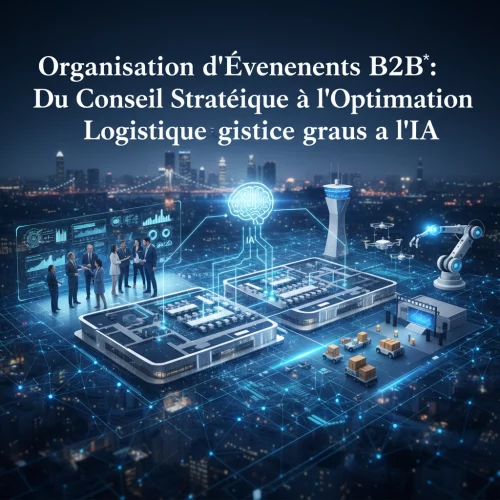
In an increasingly connected professional world, B2B event management has become an essential driver of business success. But how can these gatherings be optimized so they turn into real opportunities? The secrets of a B2B event management consultant lie in the art of creating memorable experiences that engage participants and foster productive exchanges.
Whether you’re looking for innovative ideas for your next seminar or tips for maximizing networking at conferences, this article will reveal the essential strategies for turning every event into a resounding success. Get ready to discover the keys to flawless planning and how, with expert guidance, your professional gatherings can go from ordinary to extraordinary!
Key Takeaways
A B2B event management consultant must possess a diverse set of skills to ensure the success of every project. These key skills are:
Planning and Organization: This includes managing all logistical details, such as selecting a venue, coordinating with participants, handling registrations, and managing the overall logistics of the event.
Communication: The consultant must be able to communicate effectively with all stakeholders (clients, vendors, participants, internal teams) and use modern communication tools to promote the event.
Creativity and Innovation: It is essential for a consultant to come up with innovative ideas and make every event unique and memorable—for example, through original themes, interactive activities, or immersive technologies.
The Importance of Events in the Business World
B2B events play a crucial role in business development and growth. They offer a unique platform for building professional relationships, strengthening brand awareness, and discovering new business opportunities. Conferences, seminars, and trade shows allow companies to meet potential partners, explore collaborations, and conduct business in a structured setting. In addition, these events provide an opportunity to showcase innovative products and services, gather direct feedback from the market, and position the company as a leader in its industry.
By participating in B2B events, companies can also benefit from learning and sharing best practices. Training sessions, workshops, and presentations by industry experts offer valuable insights that can be applied to improve internal processes and business strategies. Furthermore, these events foster networking and the creation of strong professional communities, which is essential for maintaining a competitive edge in an ever-changing market.
Finally, B2B events are drivers of economic growth. They generate sales opportunities, increase companies’ visibility, and stimulate innovation. By bringing together professionals from diverse backgrounds, these gatherings contribute to economic momentum by fostering international exchanges and collaborations. It is therefore imperative for companies to understand the importance of these events and to integrate them into their overall development strategy.


Key Skills for an Event Management Consultant
A B2B event management consultant must possess a diverse set of skills to ensure the success of every project. Among these, planning and organization are essential. A consultant must be able to manage every detail, from venue selection to coordinating participants, as well as handling registrations and logistics. This organizational rigor ensures that every aspect of the event runs smoothly.
Communication is another essential skill for an event management consultant. They must be able to communicate effectively with clients, vendors, attendees, and internal teams. Good communication helps clarify expectations, resolve problems quickly, and ensure that everyone is aligned with the event’s objectives. In addition, a consultant must know how to use modern communication tools to promote the event and engage participants.
In addition, creativity and innovation are key skills for an event management consultant. They must be able to come up with innovative ideas to make each event unique and memorable. Whether through original themes, interactive activities, or immersive technologies, a consultant must always strive to surprise and impress attendees. This ability to innovate is what sets a good event apart from an exceptional one.
Steps for Planning a Successful B2B Event
Planning a successful B2B event begins with a clear understanding of the objectives and expectations. The first step is to define the purpose of the event, whether it’s to launch a new product, establish business partnerships, or train employees. This goal-setting phase is crucial because it guides all subsequent decisions, from choosing the venue to selecting speakers.
Once the objectives have been defined, it’s time to move on to logistical planning. This includes selecting the venue, managing registrations, coordinating participants, and planning activities. Every detail must be carefully considered to ensure that the event runs smoothly. It’s also important to have backup plans in case of unforeseen circumstances, such as technical issues or last-minute cancellations.
The third step in planning is to promote the event. Using the appropriate communication channels—such as social media, newsletters, and press relations—helps attract a targeted audience. It’s also helpful to create a dedicated webpage for the event, where participants can find all the necessary information and easily register. Effective promotion ensures high attendance and contributes to the event’s success.

How to Set Clear Goals for Your Events
Setting clear objectives for a B2B event is a fundamental step that determines the event’s success. The first step is to identify the desired outcomes, whether quantitative or qualitative. For example, if the goal is to increase sales, it is essential to set specific targets in terms of the number of potential customers or transaction volume. If the goal is to improve brand awareness, performance metrics such as media coverage or social media mentions must be defined.
Once the overall objectives have been defined, it is important to break them down into specific, measurable sub-objectives. These sub-objectives must be realistic and achievable within the context of the event. For example, a sub-goal could be to secure a certain number of B2B meetings during the trade show or to generate a specific number of qualified leads. By breaking down the goals in this way, it becomes easier to track progress and measure the event’s success.
Finally, it is crucial to align the event’s objectives with the company’s strategic goals. This ensures that the event truly contributes to the company’s growth and development. For example, if the company is looking to enter a new market, the event should be designed to attract potential partners and customers from that market. By aligning the event’s objectives with those of the company, you maximize the event’s impact and relevance.


Marketing Strategies to Promote Your B2B Events
Effective promotion of a B2B event is crucial to ensuring high attendance and maximizing the event’s impact. A well-designed marketing strategy begins with identifying the target audience. It is essential to understand who the potential attendees are, what their needs are, and how to reach them. This analysis allows you to segment the market and tailor messages to each segment, thereby increasing the chances of success.
Once the target audience has been identified, it’s time to choose the appropriate communication channels. Social media, newsletters, blogs, and press relations are powerful tools for promoting an event. It’s also helpful to create engaging content—such as teaser videos, blog posts, and testimonials—to generate interest and engagement. Using specific hashtags and running targeted advertising campaigns on social media can also boost the event’s visibility.
In addition to online channels, traditional promotional methods—such as personalized invitations, phone calls, and ads in trade magazines—should not be overlooked. These techniques can be particularly effective for reaching a professional audience that isn’t always active on social media. A combination of online and offline methods helps maximize reach and attract a diverse audience.
The Impact of Technology on Event Management
Technology has revolutionized B2B event management, offering new opportunities to enhance the attendee experience and streamline organizational processes. Event management platforms allow you to centralize all information—from planning to execution, including registration management and participant tracking. These tools facilitate coordination among different teams and ensure smooth communication between all stakeholders.
Immersive technologies, such as virtual reality and augmented reality, offer unprecedented opportunities to create interactive and memorable experiences. For example, virtual reality can be used for product demonstrations, virtual site tours, or simulations of professional scenarios. These technologies allow for a deeper level of engagement with participants and leave a lasting impression.
Finally, data analytics tools play a crucial role in measuring the success of events. They enable the collection of real-time data on attendance, engagement, and participant satisfaction. This information is invaluable for evaluating the effectiveness of the strategies implemented and for making continuous improvements. By using data to make informed decisions, event organizers can optimize every aspect of their professional gatherings.

Key performance indicators (KPIs) are valuable tools for assessing the event’s impact on defined objectives. Among the most common KPIs are the number of attendees, the lead conversion rate, return on investment (ROI), and attendee satisfaction levels.
The number of participants is a basic indicator for measuring the event’s appeal. However, it is important not to limit yourself to this single metric. The lead conversion rate is also crucial, as it shows how many attendees have become potential customers or partners. This KPI helps evaluate the effectiveness of networking activities and presentation sessions.
Return on investment (ROI) is a key performance indicator (KPI) for measuring the event’s profitability. It takes into account the total costs of organizing the event and the revenue generated from sales, partnerships, or paid registrations. Finally, participant satisfaction is a qualitative indicator that provides valuable insights into the experience. Satisfaction surveys and direct feedback help gather constructive input and make improvements for future events.
Take, for example, the annual technology trade show organized by a leading company in the industry. The goal was to launch a new product and attract strategic partners. Thanks to meticulous planning, targeted promotion, and the use of immersive technologies, the event attracted more than 5,000 attendees and generated a record number of qualified leads. The combination of interactive presentations and networking sessions created an unforgettable experience for attendees.
Another example is an international conference on sustainability organized by an NGO. The goal was to raise awareness among businesses about sustainable practices and to foster collaborations on environmental projects. By using event management tools and live-streaming platforms, the NGO succeeded in attracting participants from around the world. Interactive sessions and hands-on workshops helped engage participants and generate innovative ideas for sustainable initiatives.
Finally, let’s consider the case of a training seminar organized by a management consulting firm. The goal was to train senior executives on new project management methodologies. By using gamification techniques and augmented reality technologies, the firm succeeded in making the training interactive and engaging. The participant satisfaction rate was extremely high, and many executives expressed their intention to apply the new skills they had acquired to their respective projects.
Conclusion and Future Outlook for B2B Event Management
In conclusion, B2B event management is a complex discipline that requires rigorous planning, effective communication, and the ability to innovate. Event management consultants play a key role in transforming professional gatherings into genuine opportunities for growth and development. Through well-defined strategies and the use of modern technologies, it is possible to create memorable experiences that engage participants and foster productive exchanges.
The future outlook for B2B event management is promising. With the rapid evolution of technology, new opportunities are emerging to enhance the participant experience and optimize organizational processes. Hybrid events, which combine in-person and virtual elements, are becoming increasingly popular, offering greater flexibility and global reach. Furthermore, the growing importance of data allows organizers to thoroughly analyze attendee behavior and make continuous improvements.
By incorporating these trends and adopting an approach centered on the participant experience, companies can maximize the impact of their B2B events. Whether the goal is to boost brand awareness, forge strategic partnerships, or uncover new business opportunities, B2B events will remain an essential driver of business success in an increasingly connected professional world.