The revolution is underway. While traditional marketers continue to optimize their SEO strategies for Google, 46% of Gen Z has already jumped ship. This generation, which accounts for 25% of the social media audience in the United States, now spends 4.5 hours a day on TikTok, Instagram, and YouTube—radically changing the rules of the game for e-commerce.
This shift in behavior is more than just a generational preference. It is completely redefining the digital marketing ecosystem and paving the way for a new era: that of hyper-personalized social commerce.
![image_1]()
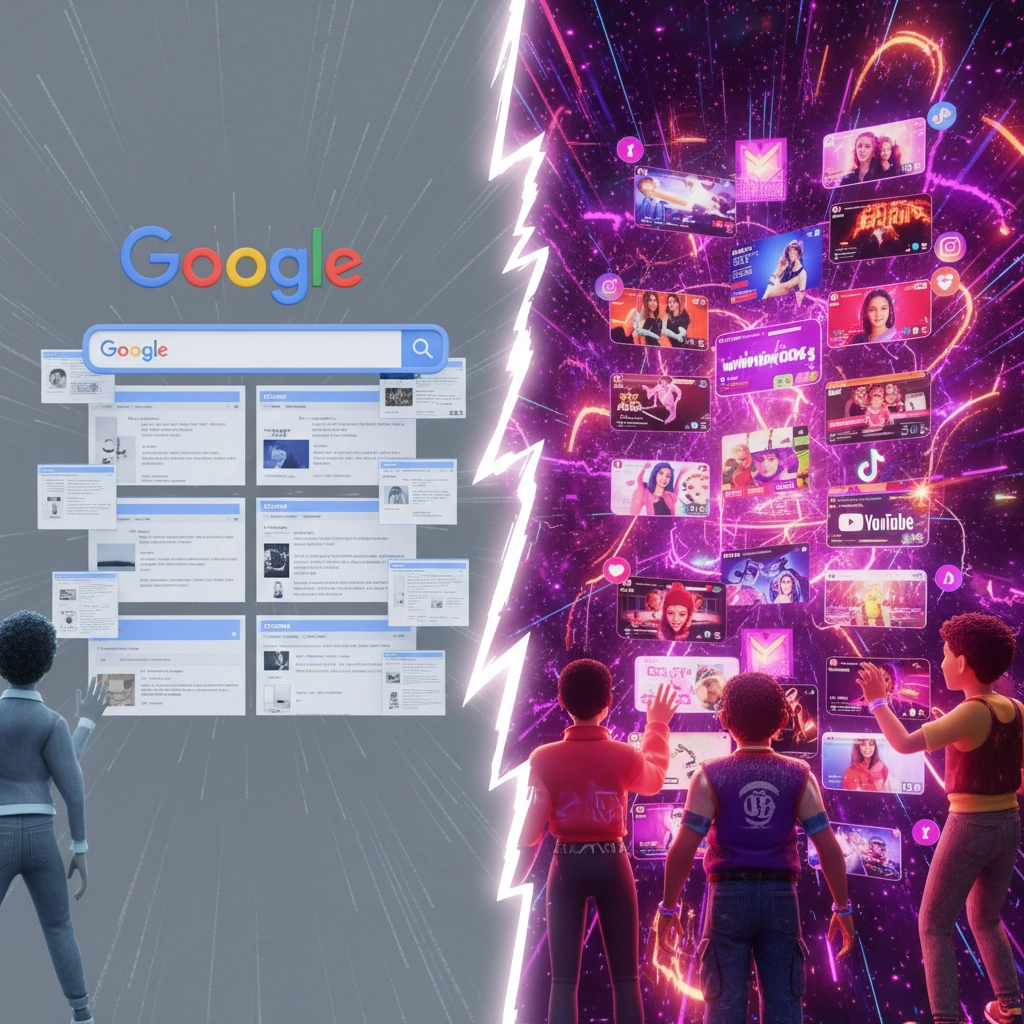 These statistics reveal a major generational divide that is shaking the very foundations of traditional SEO. Companies that continue to rely exclusively on Google risk completely missing their primary target audience.
![image_2]()
 The impact on traditional e-commerce is significant: 47% of Gen Z is actively trying to reduce their purchases on Amazon, preferring to buy directly through social media platforms. According to Infosys, more than 97% of this generation uses social media as their primary source for shopping.
This transformation offers exceptional opportunities: more than half of Gen Z shoppers discover new products through social media and buy directly from influencers. Brands that master this new dynamic gain a decisive competitive advantage.
The impact on traditional e-commerce is significant: 47% of Gen Z is actively trying to reduce their purchases on Amazon, preferring to buy directly through social media platforms. According to Infosys, more than 97% of this generation uses social media as their primary source for shopping.
This transformation offers exceptional opportunities: more than half of Gen Z shoppers discover new products through social media and buy directly from influencers. Brands that master this new dynamic gain a decisive competitive advantage.
![image_3]()
In summary: The fact that 46% of Gen Z is turning away from Google is not a passing trend but a structural revolution that is redefining the rules of digital marketing. Brands that embrace this transformation—by prioritizing authenticity, personalization, and social omnipresence—will capture the audiences of tomorrow. Those that remain stuck in yesterday’s strategies will miss out on one of the greatest commercial shifts of our time. The choice is simple: adapt or disappear.
The Mass Exodus: Google Loses Its Dominance
The numbers speak for themselves, and they are indisputable. According to a recent study by Google France, 65% of 16- to 24-year-olds now prefer social media for their information searches, abandoning traditional search engines in droves. This trend is evident across all industries. When looking for gift ideas, only 28% of Gen Z uses Google as their first choice, compared to 86% of Generation X. The gap is even more striking in lifestyle categories: only 25% turn to Google for hair and makeup tips, compared to 82% of Baby Boomers. Even when it comes to recipes—a traditional stronghold of SEO-optimized blogs—Gen Z turns to Google in only 30% of cases.
These statistics reveal a major generational divide that is shaking the very foundations of traditional SEO. Companies that continue to rely exclusively on Google risk completely missing their primary target audience.
The Three Pillars of This Behavioral Revolution
1. Speed as the New Standard
Gen Z operates on a simple principle: information must be immediate and easy to digest. On Google, getting a complete answer requires clicking on several links, reading through entire articles, and comparing different sources. On TikTok or Instagram, the same information is delivered in 30 seconds or less, in a dynamic video format. This need for speed stems from the fact that the average attention span has shrunk to 8 seconds before a Gen Z user decides whether to continue watching or stop watching a piece of content. Brands must therefore completely rethink their approach to content creation.2. The Triumph of the Immersive Visual Format
Gone are the days of long blocks of text and static descriptions. Gen Z prefers an authentic visual experience. A search like “What to see in Berlin?” will generate a list of SEO-optimized articles on Google, while TikTok will offer an immersive 60-second video featuring five must-see spots filmed in real-life settings. The most popular platforms reflect this preference: YouTube (68%), Instagram (65%), and TikTok (58%) largely dominate this generation’s search habits. This trend directly impactssocial media optimization (SMO) strategies.3. Authenticity vs. Corporate Marketing
Skepticism toward traditional marketing content is reaching unprecedented levels. 58% of Gen Z shoppers have stopped following a brand because of content they perceived as artificial or embarrassing. This generation is looking for authentic experiences: a product tested in real-world conditions, a restaurant filmed without filters, and spontaneous reviews from everyday users.The Social Commerce Boom: 77% Discover Products on TikTok
This shift toward social media is radically transforming the shopping journey. 77% of Gen Z use TikTok to discover new products, making this platform the undisputed leader in product discovery. More broadly, 82% of consumers now use social media to search for products.
The impact on traditional e-commerce is significant: 47% of Gen Z is actively trying to reduce their purchases on Amazon, preferring to buy directly through social media platforms. According to Infosys, more than 97% of this generation uses social media as their primary source for shopping.
This transformation offers exceptional opportunities: more than half of Gen Z shoppers discover new products through social media and buy directly from influencers. Brands that master this new dynamic gain a decisive competitive advantage.
AI: The Alternative That’s Gaining Momentum
Along with the rise of social media, 34% of Gen Z use AI chatbots for their searches, a rate significantly higher than that of other age groups. Trust in these tools is remarkably high: 79% of Americans trust AI search engines, and 77% trust AI chatbots. This rapid adoption of AI is part of a broader fragmentation of search behavior. For simple information, 47% still use traditional search engines, but 28% opt for AI chatbots. For complex searches, the gap narrows: 36% use traditional search engines, compared with 27% who use AI.Winning Strategies for Reaching This Audience
Ultra-Advanced Customization
88% of Gen Z is willing to share their personal data with social media platforms in exchange for better recommendations. This openness offers brands a unique opportunity to create highly personalized experiences through innovative digital marketing strategies.Authentic and User-Generated Content
Long-form content is losing ground to short videos (30–60 seconds) that deliver key information right away. Brands should prioritize:- Content created by real people
- Spontaneous Testimonials
- Product demonstrations under real-world conditions
- Complete transparency regarding processes
Cross-Platform and Responsive
Search is no longer synonymous with “Googling.” It has become a cross-platform experience in which TikTok, Instagram, YouTube, and even AI chatbots play complementary roles. Brands must tailor their content to each platform while maintaining overall consistency.The Impact on B2B Marketing Strategies
This revolution isn’t limited to B2C. Young Gen Z professionals are bringing their personal habits into the workplace. Inbound and outbound marketing strategies must therefore incorporate this new reality. B2B companies that continue to rely exclusively on traditional channels risk missing out on the next generation of decision-makers. Adapting social media management strategies is therefore a top priority.Measuring Success in This New Ecosystem
Traditional digital marketing KPIs are evolving. Engagement metrics (time spent, interactions, shares) are becoming more important than clicks. The direct conversion rate is losing its relevance as purchasing cycles become more complex and involve multiple platforms. Social listening and behavioral analysis tools are becoming essential for understanding and anticipating trends among this volatile yet influential audience.The Future of Retail: Social-First and AI-Enhanced
2025 marks the advent of a “social-first” commerce ecosystem where discovery, evaluation, and purchase take place primarily on social media. AI enhances this experience by offering highly personalized recommendations and natural, conversational interactions. Visionary brands are already investing heavily in this transformation, developing omnichannel strategies that place social media at the heart of their business model. Those that are slow to adapt risk losing touch for good with the generation that represents the future of e-commerce.In summary: The fact that 46% of Gen Z is turning away from Google is not a passing trend but a structural revolution that is redefining the rules of digital marketing. Brands that embrace this transformation—by prioritizing authenticity, personalization, and social omnipresence—will capture the audiences of tomorrow. Those that remain stuck in yesterday’s strategies will miss out on one of the greatest commercial shifts of our time. The choice is simple: adapt or disappear.