
The debate between SEO and SMO is a thing of the past. In 2025, companies that continue to view search engine optimization and social media optimization as competing strategies are missing out on a major opportunity. The current digital revolution demands a unified approach: “Search Everywhere Optimization,” a holistic strategy that recognizes that your potential customers are looking for you everywhere—on Google, LinkedIn, TikTok, and far beyond.
The Evolution of Search Behavior in 2025
Today’s users no longer rely solely on Google for their searches. According to a recent study, 46% of Gen Z starts their searches directly on social media platforms. This fundamental shift in information consumption habits is completely redefining the rules of the game for businesses.
Traditional SEO remains crucial for capturing explicit search intent—those moments when a user types “digital marketing consultant Tunis” into Google. But SMO is becoming essential for creating that intent, for establishing a presence in the discovery ecosystem where future needs are born.
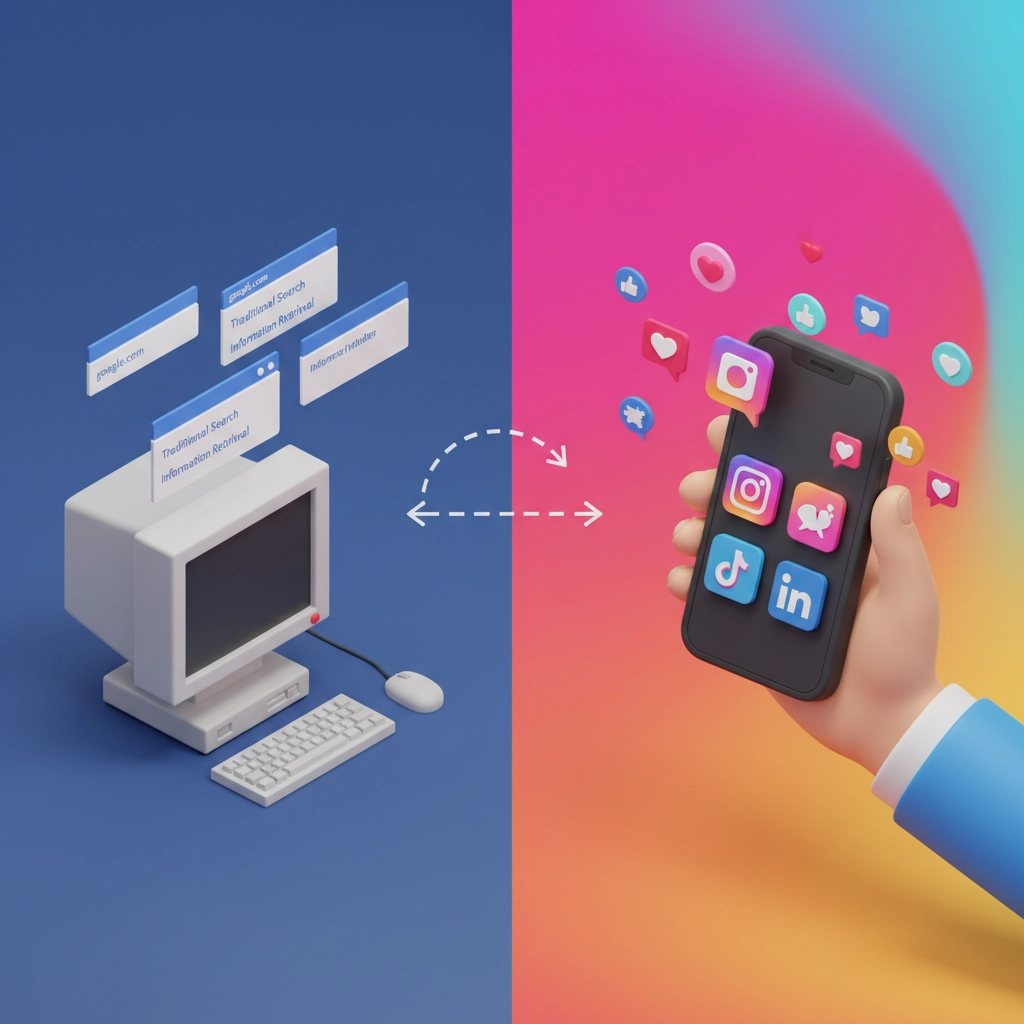
SEO vs. SMO: Understanding the Fundamental Differences
SEO: The Foundation of Your Digital Visibility
Search engine optimization (SEO) focuses on the technical and editorial optimization of your website to improve its visibility in organic search results. This approach targets users with a clear search intent, generating qualified and sustainable traffic.
The benefits of SEO include:
- Sustainable Traffic: Once a page is well-ranked, it continues to attract traffic at no additional cost
- High credibility: Users trust organic results more
- Long-term ROI: The initial investment pays for itself over several years
- Precise Targeting: Ability to capture highly specific queries
SMO: The Booster for Your Digital Presence
Social media optimization aims to maximize visibility and engagement on social media platforms. This strategy builds brand awareness and creates engaged communities around your business.
The strengths of SMO include:
- Immediate impact: The ability to generate buzz instantly
- Authentic Engagement: Building Two-Way Relationships with the Audience
- Viral potential: The ability to reach exponentially larger audiences
- Humanizing the Brand: Developing a Distinctive Brand Personality
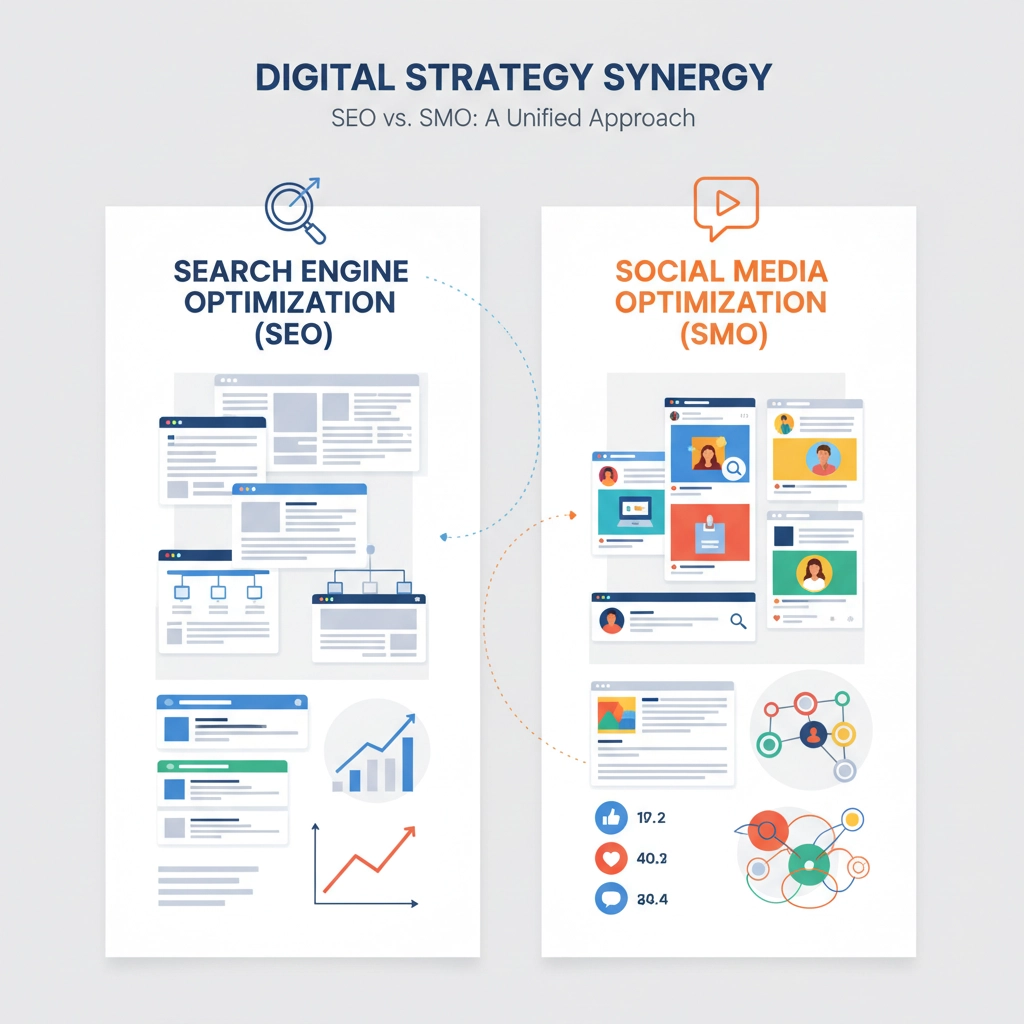
Why Integration Will Be Essential in 2025
The Evolution of Algorithms and AI
Search engines now incorporate social signals into their ranking algorithms. Google considers social engagement to be an indicator of content quality and relevance. At the same time, social media platforms are developing their own internal search engines, turning Instagram, LinkedIn, and TikTok into genuine alternatives to Google for certain types of searches.
This technological convergence renders the siloed approach obsolete. An effective digital marketing strategy must now orchestrate SEO and SMO into a cohesive whole.
The Growth in Customer Touchpoints
The modern customer journey is complex and multichannel. A prospect might discover your brand on LinkedIn, search for it on Google, read reviews on Facebook, and ultimately convert through your SEO-optimized website. Each touchpoint must be optimized according to its specific characteristics while supporting the overall goal.
Practical Implementation of “Search Everywhere Optimization”
1. Cross-Channel Audit and Assessment
Start by analyzing your current presence across all channels. Identify:
- Your SEO rankings for strategic keywords
- Your engagement rate on each social media platform
- Potential synergies between your content
- Gaps in Your Digital Ecosystem
2. Unified Content Strategy
Develop a content architecture that supports both your SEO and SMO goals:
SEO Pillar Content: Create Comprehensive, Search Engine-Optimized Resources
SMO Micro-Content: Adapt these resources to formats suitable for each social media platform
Cross-Channel Storytelling: Maintain narrative consistency across all your channels
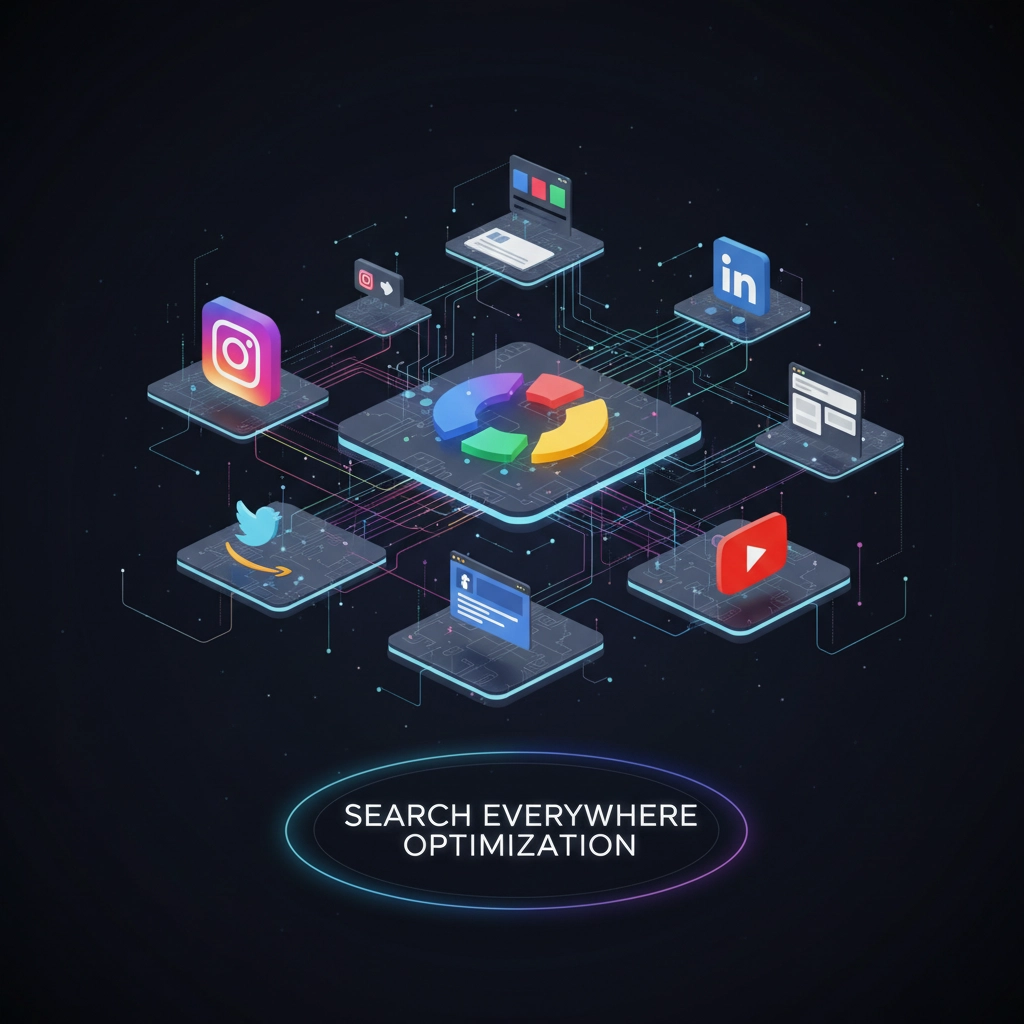
3. Cross-Platform Technical Optimization
For SEO:
- Optimizing Title Tags and Meta Descriptions
- Improved Loading Speed
- Schema.org Data Structuring
- Strategic Internal Linking
For the SMO:
- Optimizing Company Profiles
- Strategic Use of Hashtags
- Optimal Scheduling of Posts
- Creating Visually Appealing Content
4. Advanced SEO-SMO Synergy
Use data from one channel to inform the other:
- Use popular keywords identified through SEO to optimize your social media content
- Turn your most engaging social media posts into in-depth SEO content
- Create social media campaigns to amplify your top SEO content
Key Metrics for “Search Everywhere Optimization”
Traditional SEO Metrics
- Average rankings for target keywords
- Organic Traffic and Conversion Rate
- Domain authority and number of backlinks
Essential SMO Metrics
- Engagement Rates by Platform
- Audience Growth and Organic Reach
- Shares and Brand Mentions
Innovative Cross-Channel KPIs
- Multi-channel recognition rate: The percentage of users who interact with your brand across multiple channels
- Narrative Consistency Score: Aligning Your Message Across All Touchpoints
- SEO-SMO Synergy Index: How Your Social Media Activities Affect Your Organic Search Rankings

Industry-Specific Use Cases
B2B Companies
Strategy consulting firms can use LinkedIn to establish their expertise while optimizing their website for specialized search queries. Thought leadership content published on LinkedIn drives engagement and traffic to SEO-optimized blog posts.
E-commerce
E-commerce businesses combine Pinterest and Instagram for product inspiration, while optimizing their product listings for Google Shopping searches. This approach captures users at different stages of the conversion funnel.
Local Services
Local service providers use Google My Business (local SEO) in combination with Facebook and Instagram (local SMO) to dominate their geographic market across all search channels.
Challenges and Solutions of the Integrated Approach
Challenge: Limited Resources
Solution: Prioritize efficiency by identifying content with high cross-channel potential. A good blog post can fuel 10 different social media posts.
Challenge: Message Consistency
Solution: Develop a single editorial guide that adapts to the specific characteristics of each platform while maintaining the brand identity.
Challenge: Measuring Cross-Channel ROI
Solution: Implement a multi-touch attribution system that recognizes the influence of each touchpoint in the conversion journey.

The Future of “Search Everywhere Optimization”
Artificial intelligence is already transforming the way we optimize our content.AI and customer relationship management tools enable personalization at scale, automatically tailoring the message to the channel and audience.
Voice and visual search are also redefining the rules. Optimizing for “Hey Siri, find me a digital marketing consultant” requires a different approach than optimizing for traditional text-based search.
Summary: Your 2025 Roadmap
“Search Everywhere Optimization” is not a passing trend but a natural evolution of digital marketing. Companies that adopt it now will gain a significant edge over their competitors.
Start by assessing your current online presence, develop a cross-channel content strategy, and rigorously measure your results. The goal is no longer to be visible on Google OR on social media, but to be everywhere your customers are looking for you—and even where they don’t yet know they’re looking for you.
The future belongs to companies that understand that digital visibility is a complex ecosystem where SEO and SMO reinforce each other. By 2025, the question will no longer be “SEO or SMO?” but “How can I optimize my entire digital ecosystem to maximize my visibility wherever my customers are looking for me?”