
Generative artificial intelligence marks a major technological breakthrough in the digital marketing landscape. By 2025, this revolution will no longer be a matter of future projections but an operational reality that companies must master to remain competitive. According to the McKinsey Global Institute, generative AI could generate between $2.6 trillion and $4.4 trillion in annual economic value, with marketing and sales accounting for 75% of that impact.
This transformation is accelerating particularly in Africa’s emerging economies, where the adoption of technology makes it possible to bypass traditional stages of marketing development. Companies that integrate generative AI into their digital marketing strategies now are gaining a decisive edge over their competitors.
The Technical Foundations of Generative AI Applied to Marketing
Generative AI relies on large language models (LLMs) capable of producing original content based on massive amounts of training data. These systems use transformer architectures, including GPT (Generative Pre-trained Transformer), DALL-E for images, and multimodal models such as Claude or Gemini.
The fundamental difference from traditional AI lies in its creative capacity: rather than simply analyzing or categorizing existing data, generative AI creates entirely new content. For marketing, this means the automated production of advertising copy, visuals, videos, and even personalized interactive experiences.
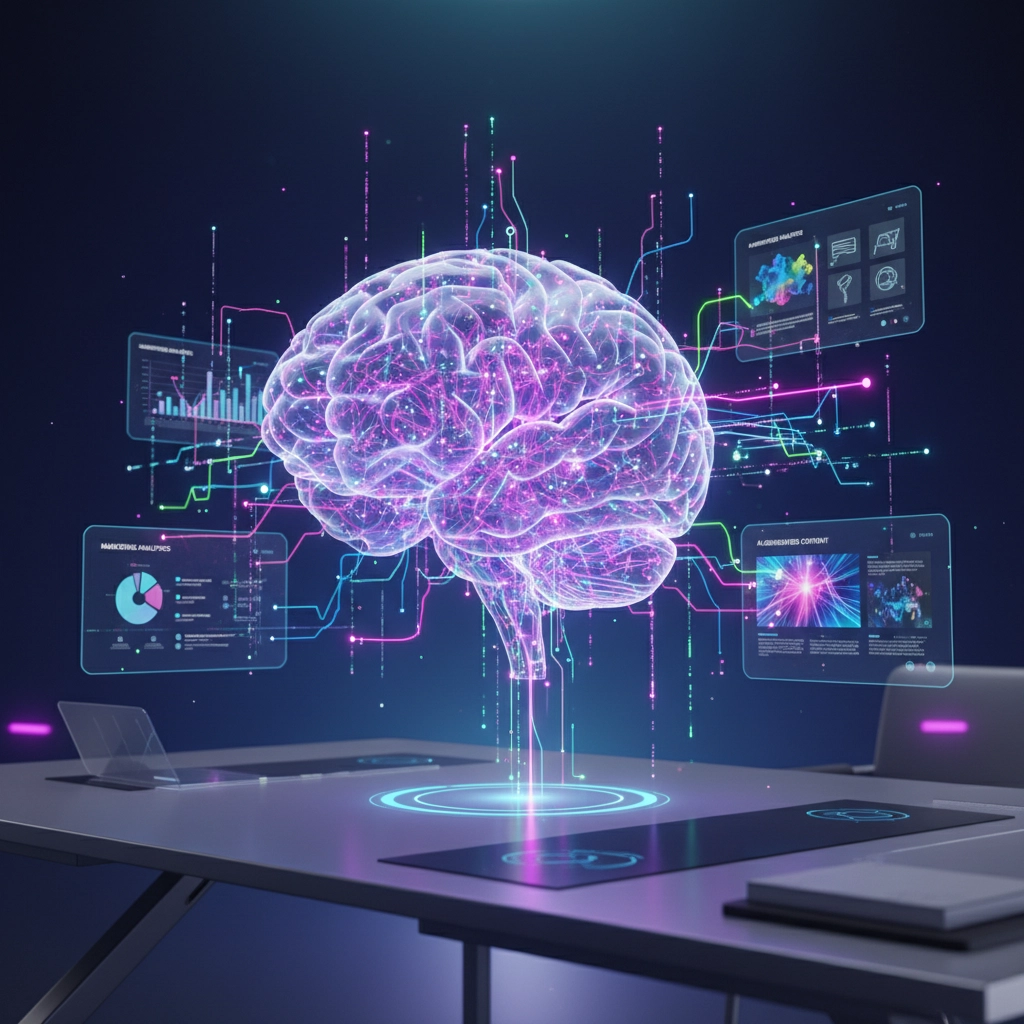
Practical applications fall into three main categories: content generation (text, images, video), conversational optimization (advanced chatbots, virtual assistants), and dynamic personalization (real-time adaptation of content based on user profiles). This technology is radically transforming social media management and marketing content creation processes.
Revolutionizing Marketing Content Creation
Large-scale automated production
Generative AI makes it possible to produce volumes of content that would be unimaginable using traditional methods. Jasper AI, used by more than 100,000 companies, generates the equivalent of millions of words of marketing content every day. This capability is particularly transforming e-commerce campaigns: Amazon uses generative AI to automatically create SEO-optimized product descriptions in 15 languages simultaneously.
The French startup Mistral AI has developed models specifically trained for French-speaking markets, enabling the generation of content that is culturally tailored to European and African markets. These tools produce blog posts, social media posts, newsletters, and sales pages while taking local linguistic nuances into account.
Automatic SEO Optimization
The integration of generative AI into SEO strategies is revolutionizing SEO content creation. Tools like Surfer AI analyze search intent and automatically generate articles optimized for target keywords.
Real-world example: A financial services company can now produce 50 blog posts per month targeting specific long-tail search queries, compared to just 4 previously. This increase in content significantly improves organic visibility and qualified traffic.
Next-Generation Marketing Personalization
Behavioral Hyper-Personalization
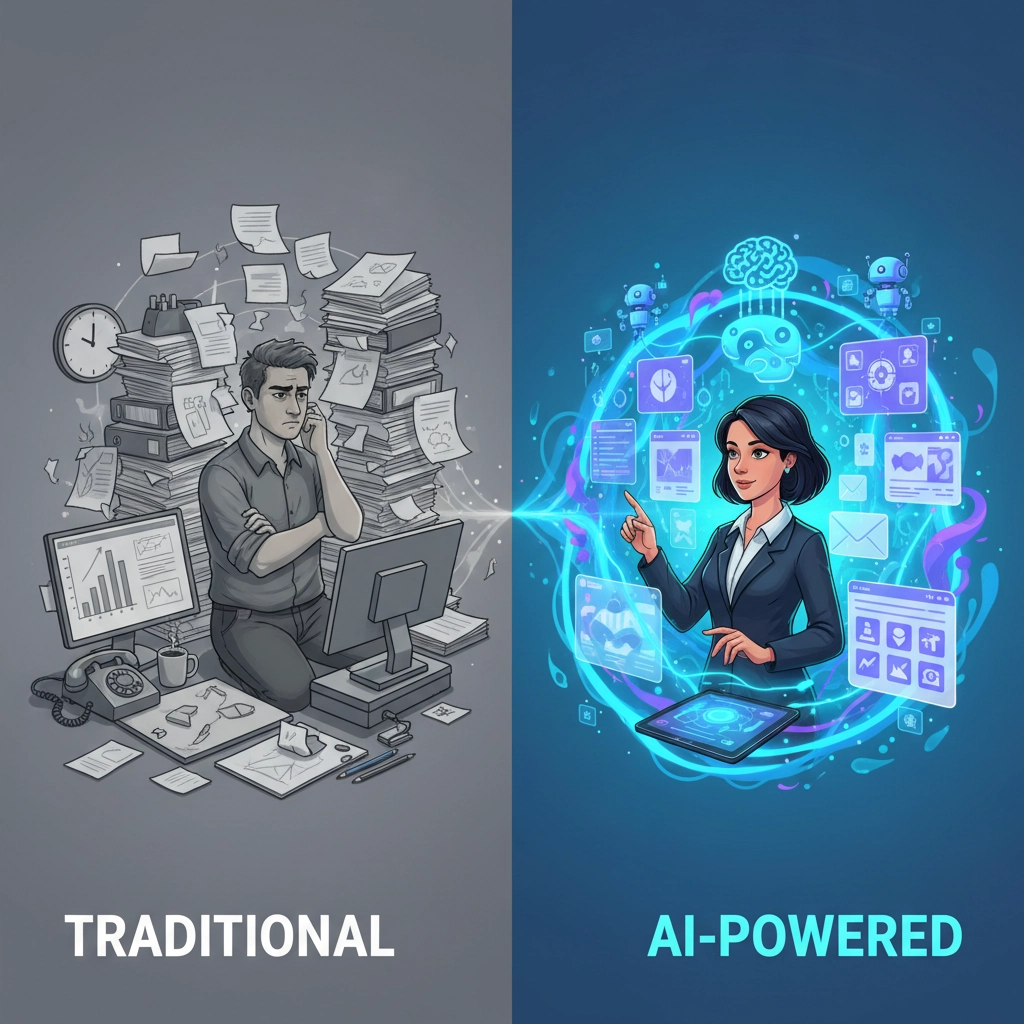
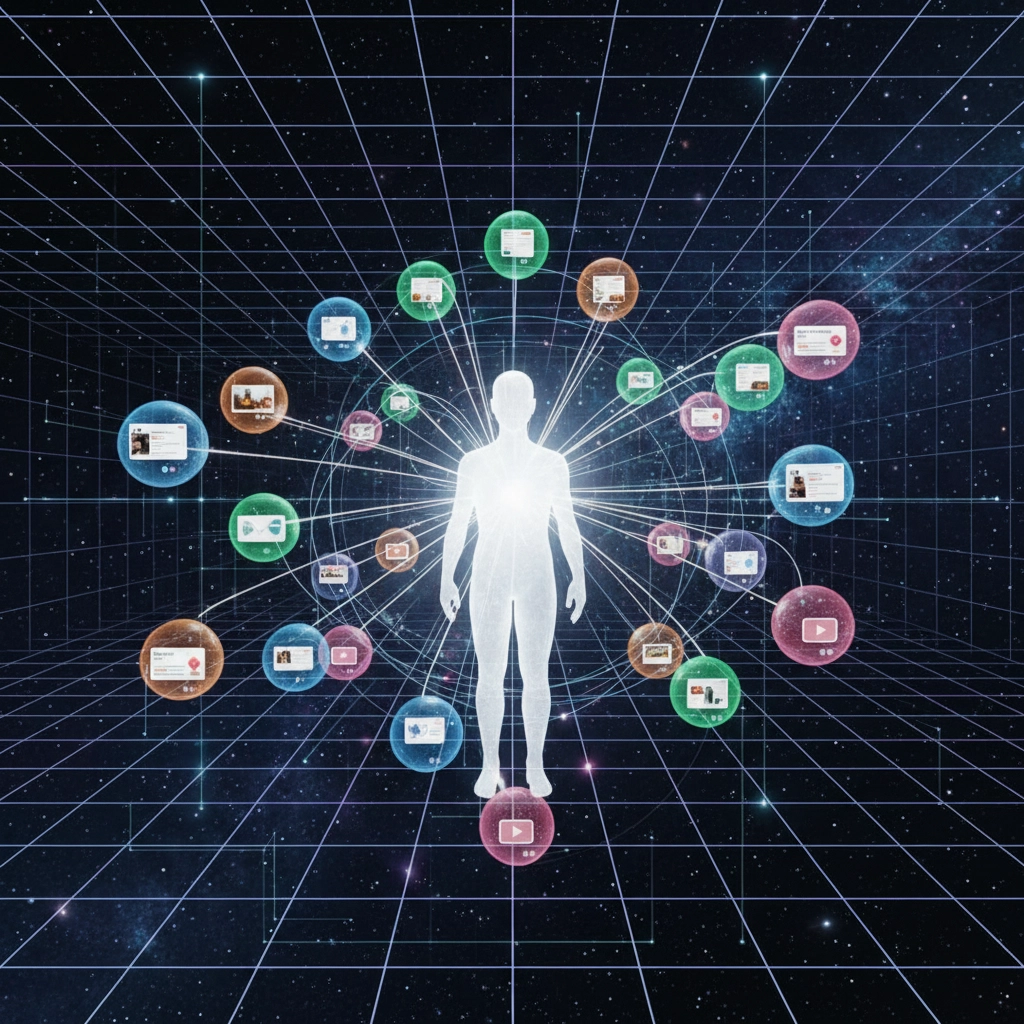
Generative AI makes it possible to move beyond traditional segmentation to achieve individualized personalization. Netflix uses generative algorithms to create unique cover images for each user based on their viewing history. When applied to B2B marketing, this approach generates personalized sales proposals for each prospect.
The American company Persado has developed an AI capable of drafting emotionally optimized marketing emails for each recipient. Their clients have seen average improvements of 41% in open rates and 49% in click-through rates, demonstrating the effectiveness of this personalized approach.
Cultural and Linguistic Adaptation
For companies operating in multiple markets, generative AI makes it easier to culturally adapt content. Beyond simple translation, these tools tailor messages to local cultural norms, popular references, and regional sensitivities.
An advertising campaign developed for the French market can be automatically adapted for the Moroccan, Tunisian, or Senegalese markets, with appropriate linguistic, cultural, and visual adjustments. This capability is particularly strategic for African companies seeking to establish a presence in diverse French-speaking markets.
Intelligent Automation of Advertising Campaigns
A dynamic generation of advertising creatives
Generative AI is transforming ad creation by enabling the automatic generation of creative variations. Google Performance Max already uses this technology to automatically test thousands of combinations of images, headlines, and descriptions, continuously optimizing performance.
Coca-Cola has launched “Create Real Magic,” a platform that enables its global marketing teams to generate advertising creatives that adhere to brand guidelines while adapting to local nuances. This approach reduces production costs by 60% while increasing the number of variations tested tenfold.
Predictive Bid Optimization
The integration of generative AI into online advertising platforms enables automatic optimization of bidding strategies. These systems analyze performance signals in real time and adjust campaigns to maximize ROI.
Amazon Advertising uses generative models to predict purchase intent and dynamically adjust bids based on the probability of conversion. This approach improves campaign performance by an average of 23% compared to traditional optimization methods.
Industry-Specific Use Cases
Banking and Fintech
Financial institutions are using generative AI to personalize their communications with customers. Société Générale has deployed generative chatbots capable of providing personalized financial advice based on each customer’s risk profile and goals.
In Africa, the Kenyan fintech company M-Shwari uses generative AI to create savings awareness messages tailored to local socioeconomic profiles, increasing adoption of its savings products by 34%.
E-commerce and Retail
Shopify has integrated generative AI into its platform, enabling merchants to automatically generate product descriptions, promotional images, and email campaigns. Merchants using these tools are seeing an average 27% increase in their conversion rates.
The French company Veepee uses generative AI to create personalized newsletters for each of its 50 million members, tailoring the content, tone, and offers based on purchase history and individual preferences.
Real Estate Sector
Real estate agencies are using generative AI to create compelling property listings and personalized virtual tours. Matterport offers tools that automatically generate property listings optimized for different customer segments based on 3D scans.
Essential Technologies and Tools in 2025
Generative AI Marketing Platforms
- HubSpot AI: Native integration into marketing workflows for content generation and campaign automation
- Adobe Sensei GenAI: Creating Personalized Marketing Visuals and Videos at Scale
- Salesforce Einstein GPT: Generating Personalized Sales Content Based on CRM Data
- Canva Magic Design: Automatic creation of marketing designs that align with your brand identity
APIs and Technical Solutions
Integrating generative AI APIs such as OpenAI GPT-4, Anthropic’s Claude, or Google’s PaLM 2 enables companies to develop customized marketing solutions. These integrations require development expertise and a robust technical architecture to handle high volumes of requests.
The emergence of no-code solutions such as Zapier AI and Microsoft Power Platform AI Builder is making these technologies more accessible to marketing teams without advanced technical skills.
Ethical Challenges and Best Practices
Transparency and Authenticity
The use of generative AI raises important ethical questions regarding transparency toward consumers. European regulations and the U.S. FTC’s guidelines are increasingly requiring disclosure of the use of AI in the creation of marketing content.
Best practices include labeling AI-generated content, having sensitive messages reviewed by humans, and respecting copyright in the training data used.
Data Protection and GDPR Compliance
The use of personal data for personalization via generative AI must comply with data protection regulations. The implementation of consent management systems and the anonymization of training data are essential prerequisites.

Algorithmic Bias and Inclusion
Generative AI models can reproduce biases present in their training data. Companies must regularly audit their outputs to detect and correct potential instances of discrimination, which are particularly important in marketing campaigns targeting diverse audiences.
Performance Measurement and ROI
Metrics Specific to Generative AI
Evaluating the effectiveness of campaigns that use generative AI requires appropriate KPIs:
- Content velocity: the volume of content produced per hour or per day compared to traditional methods
- Personalization score: level of content customization by audience segment
- Increased Engagement Rates: Improving Engagement Metrics Through Personalization
- Optimized Cost Per Acquisition: Reducing CPA Through Automation and Optimization
Analysis and Reporting Tools
Platforms such as Google Analytics 4 now include tracking features specifically designed for AI-optimized campaigns. These tools make it possible to accurately identify the impact of generative AI on marketing performance and to continuously optimize strategies.
Using automated A/B testing tools such as Optimizely or VWO makes it possible to systematically compare the performance of AI-generated content with that of manually created content, providing objective data on the effectiveness of these technologies.
Strategies for Phased Implementation
Start-up phase (0–3 months)
- Audit of existing processes: Identify repetitive and time-consuming tasks in content creation
- Team Training: Developing Skills in Rapid Engineering and the Use of AI Tools
- Pilot Tests: Launching Trials on Low-Risk Campaigns
- Implementing safeguards: defining validation and quality control processes
Deployment Phase (3–12 months)
- Integration into workflows: gradually automate content creation processes
- Large-Scale Personalization: Deploying Dynamic Personalization Across Key Channels
- Continuous Optimization: Using Performance Data to Refine Models
- Expanding to Strategic Campaigns: Applying Generative AI to High-Stakes Campaigns
Aging phase (12+ months)
- Native Generative AI: Integrating AI into Every Aspect of Marketing Strategy
- Product Innovation: Developing New Marketing Services Based on Generative AI
- Competitive Advantage: Using AI Expertise as a Market Differentiator
- Partner Ecosystem: Collaborating with Providers Specializing in AI for Marketing
Impact on the marketing organization
Changes in Skills and Occupations
The integration of generative AI is profoundly transforming marketing roles. Roles are shifting toward supervision, strategic creation, and the optimization of AI systems. Skills in prompt engineering, data analysis, and an understanding of AI models are becoming essential.
This transformation requires ongoing training programs and a reorganization of marketing teams to incorporate these new skills. Human resources consulting firms specializing in digital transformation are becoming crucial to supporting this shift.
New Marketing Value Chain
Generative AI is completely redefining the marketing value chain: from ideation to distribution, every step now incorporates AI components. This transformation requires a holistic approach to business transformation to maximize organizational benefits.
Conclusion: The Strategic Imperative for 2025
Generative AI is no longer just a technological option but a competitive imperative for companies that want to thrive in 2025. This revolution is fundamentally transforming content creation, customer personalization, and the operational efficiency of marketing teams.
Companies that master these technologies today gain a decisive edge over their competitors. The challenge is no longer simply adopting generative AI, but rather the speed and efficiency with which it is strategically implemented.
To successfully navigate this transformation, companies must adopt a systematic approach: training teams, gradually integrating the changes into existing workflows, and continuously measuring the impact on performance. Support from experts in digital transformation is essential for navigating this major technological transition.
The future of digital marketing belongs to organizations capable of combining human creativity with the power of generative AI. This synergy will define tomorrow’s marketing leaders and determine competitive success in the digital economy of 2025.