
Artificial intelligence is revolutionizing the entertainment industry at breakneck speed. From personalized recommendations to automated content generation and optimized production processes, AI is fundamentally transforming the way we create, distribute, and consume television and film content. This technological revolution is opening up unprecedented opportunities, particularly for emerging markets such as Tunisia.
American Viewers’ Growing Appetite for AI
Promising Adoption of AI Features
Recent data reveals significant enthusiasm among American viewers for artificial intelligence features in their viewing experience. According to a 2024 Statista study, 35% of respondents say they are “very interested” in the integration of AI into their media consumption habits, while an additional 40% express moderate interest in these technological innovations.
This responsiveness is centered around three main areas. Personalized recommendations top the list of preferences, allowing algorithms to analyze viewing habits to suggest content perfectly tailored to individual tastes. Facilitating group search is the second key area of interest, offering families and groups of friends tools to quickly discover shows that everyone is likely to enjoy. Finally, automated review summaries appeal to viewers by condensing expert and audience opinions into a few pithy sentences.

Reluctance Toward Embedded Chatbots
Paradoxically, the integration of conversational chatbots into streaming platforms has generated less enthusiasm. This reluctance is likely due to the perceived intrusiveness of these virtual assistants in the entertainment experience, which is traditionally associated with relaxation and escapism. Viewers prefer features that enhance their experience without making it more complicated.
This behavioral analysis reveals a strong preference for transparent technologies that enhance the user experience without creating friction. Consumers embrace AI when it simplifies their choices and optimizes their search time, but they are resistant to conversational interfaces that are perceived as barriers to immersion.
The Audiovisual AI Technology Ecosystem
Automated Generation Tools
Today, the industry has a sophisticated technological arsenal at its disposal for content creation. Platforms such as Synthesia, Pictory, and DeepBrain AI make it possible to generate professional videos directly from text scripts. These solutions are radically transforming pre-production processes by automating the creation of storyboards, the generation of voice-overs, and even the design of virtual characters.
The widespread adoption of these tools is revolutionizing access to audiovisual production. Independent creators can now produce professional-quality content without a large budget or specialized equipment. This technological accessibility is redefining the barriers to entry in the film and television industry.
Artificial Intelligence in Post-Production
AI-powered editing solutions, including Runway ML, Adobe Sensei, and Descript, automate time-consuming post-production tasks. These algorithms automatically analyze raw footage, identify the best takes, sync audio, and generate multilingual subtitles in real time.Optimizing workflows allows editors to focus on creative aspects rather than repetitive technical tasks.
Automated colorimetry and AI-driven image correction have now reached levels of sophistication comparable to the work of experienced colorists. These advances significantly reduce production costs while maintaining high quality standards.
Strategic Opportunities for Tunisia
Modernization of the National Audiovisual Infrastructure
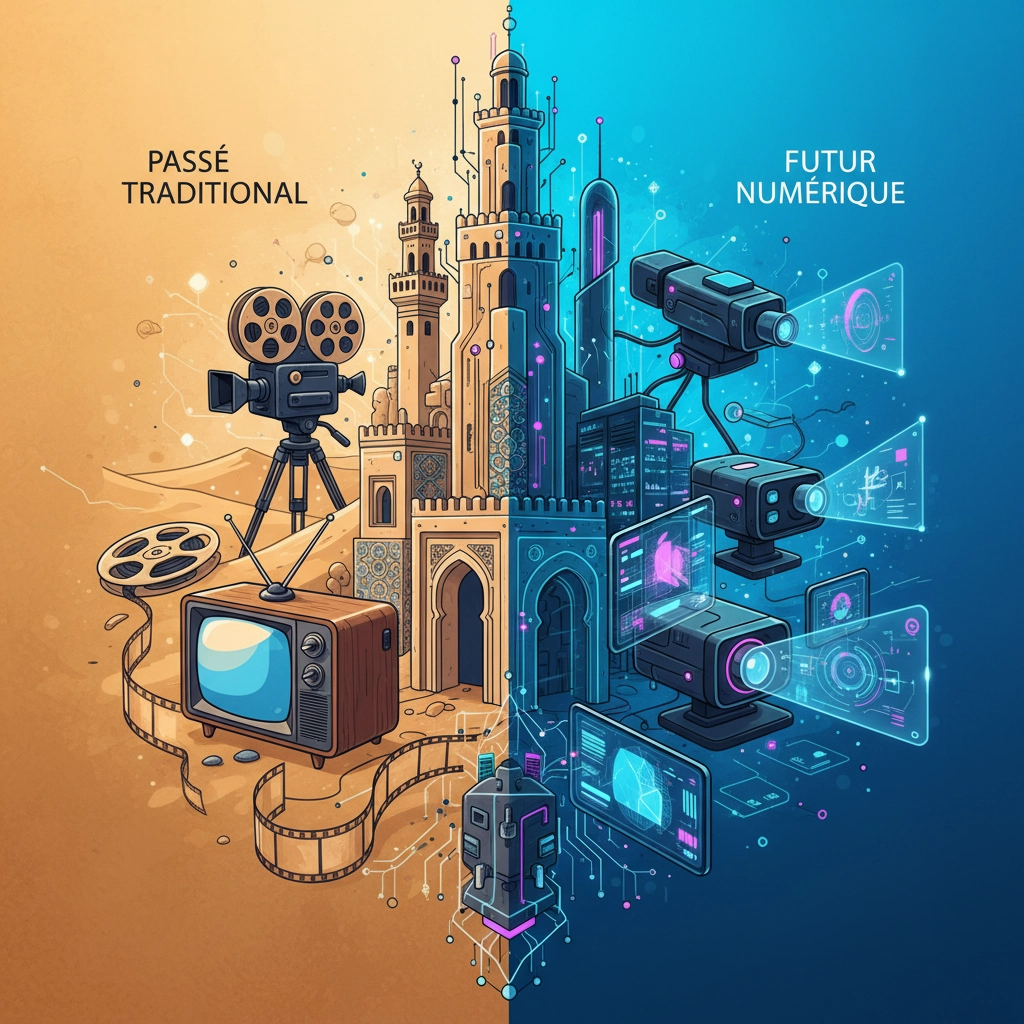
Tunisia has a rich audiovisual heritage that is underutilized from a technological standpoint. The Tunisian Television Corporation (ETT) is currently developing partnerships with France’s INA and the European Union to modernize the management of its historical archives. The implementation of AI solutions would help showcase this heritage by automating the indexing, searching, and recommendation of archival content.
Speech recognition and automatic transcription algorithms could transform thousands of hours of recordings into searchable and usable databases. This modernization would position Tunisia as a regional pioneer in the digital preservation of audiovisual heritage.
A Competitive Edge for Communications Agencies
Tunisian communications consulting firms can capitalize on this technological revolution to develop new value-added services. Socials Analytica is already helping its clients integrate AI tools to optimize their digital marketing strategies and social media management.
The production of personalized video content for different audience segments is becoming accessible thanks to automated generation tools. Agencies can offer multichannel campaigns tailored to the cultural and linguistic characteristics of the Tunisian market, while maintaining competitive costs in the face of international competition.
Innovation in Training and Education
The Tunisian education sector stands to benefit significantly from these technological advances. The creation of interactive educational content, the personalization of learning paths, and the automated generation of training materials open up unprecedented opportunities for distance learning and vocational training.
Tunisian universities could develop specialized programs in AI applied to media, thereby fostering local expertise capable of meeting the needs of the regional market. This approach would promote the emergence of a competitive national technology ecosystem.
Challenges and Strategic Considerations
Balance Between Innovation and Authenticity
The adoption of AI in content creation raises fundamental questions aboutartistic authenticity and human creative value. Tunisian producers must develop integration strategies that preserve local cultural identity while reaping the benefits of technology.
The temptation to prioritize speed and cost-effectiveness at the expense of narrative quality is a major pitfall. Tunisian studios must view AI as a tool for creative amplification rather than a substitute for human inspiration.
Technical Skills Development
Mastering these technologies requires significant investments in training and infrastructure. Tunisian audiovisual professionals must acquire new skills to effectively utilize these tools. Socials Analytica offershuman resources optimization programs tailored to these digital transformation challenges.
International collaboration and technology partnerships are key drivers for accelerating this skills development. Tunisia could establish cooperation agreements with European or American technology companies specializing in audiovisual AI.

Strategic Recommendations from Socials Analytica
A Progressive Approach to Integration
We recommend that Tunisian companies adopt a phased implementation strategy, starting with the least risky applications: optimizing post-production processes, personalizing recommendations, and automating the creation of marketing content. This approach allows companies to gradually gain mastery of the technologies before moving on to more complex applications.
Investing in pilot projects with recognized technology partners minimizes risks while allowing for a concrete assessment of return on investment. Our expertise in strategic consulting supports this process of evaluation and optimization.
Development of Collaborative Ecosystems
The creation of sector-specific consortia bringing together producers, distributors, communications agencies, and educational institutions would facilitate the sharing of technology costs and the development of collective expertise. These collaborations would make it possible to develop solutions tailored to the specific characteristics of the Tunisian market.
Incubators specializing in creative technologies could support the emergence of local startups developing customized AI tools for the regional audiovisual industry. This entrepreneurial approach would create new skilled jobs and enhance the sector’s appeal.
Future Outlook
Artificial intelligence is irreversibly transforming the global audiovisual industry. For Tunisia, this revolution represents a historic opportunity to modernize its media sector and develop new capabilities for exporting creative content.
The success of this transformation will depend on the ability of local stakeholders to strike a balance between technological innovation and the preservation of Tunisia’s cultural identity. Communications agencies, audiovisual production companies, and public institutions must collaborate to build a robust and competitive digital ecosystem.
The strategic adoption of these technologies, coupled with targeted investments in training and infrastructure, will position Tunisia as a regional creative hub capable of producing and exporting innovative audiovisual content to African and Middle Eastern markets. The AI revolution won’t wait: it’s time to seize these opportunities to shape the future of Tunisia’s audiovisual industry.