
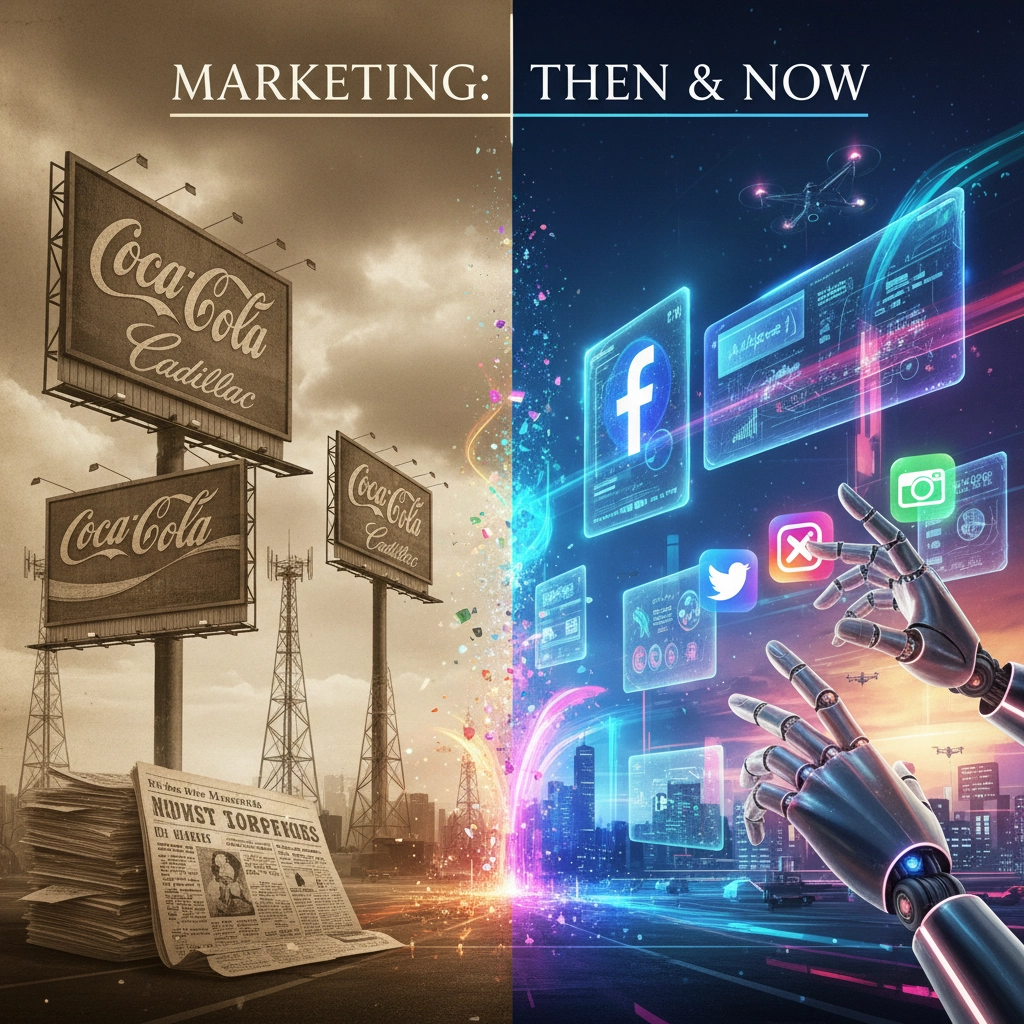
By 2025, building a strong digital brand identity is no longer just a competitive advantage—it has become an absolute necessity for survival in the digital ecosystem. Companies that neglect this aspect watch as their competitors gain significant market share—sometimes irreversibly. The emergence of artificial intelligence and the ubiquity of social media have profoundly changed the rules of the game, creating new opportunities but also new challenges for brands.
The Evolving Digital Landscape: A Constantly Changing Playing Field
The digital landscape of 2025 is characterized by extreme audience fragmentation and ever-shorter attention spans. Consumers navigate between TikTok, LinkedIn, Instagram, and other emerging platforms with disconcerting ease. They expect brands to maintain a consistent presence across all these channels, while also demanding highly personalized experiences.
This trend is accompanied by increasingly sophisticated expectations. Users are no longer satisfied with generic advertisements; they seek out brands that share their values, understand their specific needs, and know how to create an authentic emotional connection. Successful companies are those that manage to combine cutting-edge technology with a human touch.

Artificial Intelligence: A Catalyst for Transformation for Brands
Predictive Analytics and Customer Insights
AI is revolutionizing the way brands understand their audiences. Machine learning algorithms now analyze millions of data points in real time: purchase history, social media interactions, browsing behavior, and stated and implied preferences. This analysis makes it possible to create highly accurate customer profiles and anticipate their future needs.
Take Netflix, for example: the platform uses AI to analyze not only what users watch, but also when they pause, at what point they stop watching a show, and even how fast they scroll through the interface. This data feeds into a recommendation algorithm that creates a unique experience for each subscriber, thereby reinforcing Netflix’s brand identity as the “expert in personalized content.”
Automated Content Creation and Brand Consistency
Generative AI tools now make it possible to create content at scale while maintaining perfect brand consistency. Platforms like Jasper and Copy.ai can generate advertising copy, product descriptions, and even video scripts that align with a brand’s tone and values.
This automation does not replace human creativity; rather, it amplifies it. A marketing team can now test hundreds of variations of an ad, analyze their performance in real time, and automatically optimize campaigns. This approach enables unparalleled precision and efficiency in building brand identity.
Social Listening and Reputation Management
AI is also transforming the way brands monitor their online reputation. Tools like Brandwatch and Mention continuously analyze social media conversations, identify emerging trends, and alert brands to potential risks.
These systems can detect subtle shifts in consumer sentiment, allowing brands to adjust their strategy before a crisis escalates. For example, if AI detects an increase in negative mentions related to a specific aspect of a product, the marketing team can quickly adapt its messaging to address these concerns.
Social Media: New Platforms for Brand Expression
The Revolution in Short, Immersive Content
TikTok has revolutionized the way we communicate with its short videos and high-performance algorithm. The brands that succeed on this platform are those willing to step outside their comfort zone and adopt a more spontaneous and authentic tone. Duolingo is a perfect example of this transformation: the language-learning app created a quirky mascot that interacts humorously with its community, generating millions of views and significantly boosting its brand awareness.
Instagram, for its part, focuses on aesthetics and visual storytelling. Stories, Reels, and IGTV offer brands a range of tools to create immersive experiences. Fashion brands like Jacquemus excel at using these formats, creating a cohesive visual world that blurs the lines between advertising and editorial content.
LinkedIn: Redefining the B2B Landscape
LinkedIn has established itself as the go-to platform for B2B brands. But the rules are different there: users expect value-added content, industry insights, and proven expertise. Companies that thrive on LinkedIn, such as HubSpot and Salesforce, regularly share case studies, market analyses, and practical advice that position their brands as thought leaders.
Practical Guide: Building Your Digital Identity Step by Step
Audit and Assessment of the Current Situation
Before building, it is necessary to assess the current situation. This audit phase includes analyzing the current digital presence, evaluating the consistency of messaging across all channels, and measuring brand perception among target audiences.
Tools like SEMrush or Ahrefs allow you to analyze SEO visibility, while social listening platforms provide an accurate picture of your online reputation. This step often reveals surprising inconsistencies: a corporate tone on LinkedIn and a casual one on Instagram, conflicting messages between the website and social media, or a complete absence on certain channels that are nonetheless frequented by the target audience.
Definition of the Brand Ecosystem
Building a strong digital identity begins with clearly defining the brand ecosystem. This ecosystem includes:
Mission and Values: Why does the company exist? What are its core principles? These elements must be articulated in a clear and memorable way.
Competitive positioning: What sets the brand apart from its competitors? This differentiation must be tangible and valued by the target audience.
Brand personality: If the brand were a person, what would it be like? This personification helps define the brand’s tone of voice and approach to building relationships.
The brand promise: What unique benefit does the brand offer its customers? This promise must be credible and verifiable.
Creation of the visual and narrative universe
A digital visual identity goes far beyond a simple logo. It encompasses the color palette, typography, photographic style, social media templates, and even animation and video.
The most successful brands create comprehensive digital style guides that precisely define how to use each element across every channel. For example, Airbnb has developed a design system called the “Design Language System” that ensures perfect consistency across its website, mobile apps, and social media communications.
Storytelling is the other pillar of this world. Brands must develop coherent narratives that resonate with their audiences. Patagonia excels at this by centering all of its communications on environmental protection, creating a strong emotional connection with its customers.

Multichannel Optimization and Unified Experience
Adaptive Content Strategy
Each platform has its own unique characteristics, conventions, and algorithms. An effective content strategy adapts the brand message to these specific characteristics without losing its overall consistency.
On LinkedIn, for example, long-form, thought-provoking content performs better, while on TikTok, humor and authenticity take precedence. A brand like Adobe manages to maintain consistency while adapting its approach: technical and educational content on LinkedIn, creative tutorials on YouTube, and visual inspiration on Instagram.
This adaptation requires a detailed understanding of each platform’s algorithms. Instagram’s algorithm prioritizes quick engagement, LinkedIn’s algorithm values high-quality discussions, while TikTok rewards retention and shares.
Personalization and Advanced Segmentation
AI now makes it possible to personalize the brand experience at a granular level. Companies can create differentiated customer journeys based on each user’s profile, preferences, and behavior.
Amazon perfectly illustrates this approach with its fully personalized homepage, tailored product recommendations, and targeted email campaigns. This personalization isn’t limited to e-commerce: service companies can tailor their sales pitches, the case studies they present, and even their pricing based on their prospects’ profiles.
Performance Measurement and Continuous Optimization
KPIs and Brand Identity Metrics
Measuring the effectiveness of a digital identity strategy requires defining specific KPIs that go beyond mere vanity metrics. Relevant indicators include:
Brand awareness: Measured through regular surveys and recall tests.
Perceived consistency: Assessed by analyzing customer comments and feedback across various channels.
Qualified Engagement: Beyond the number of likes, analyzing the quality of interactions and conversations generated.
Cross-Channel Conversion: Measuring the ability to convert social interactions into sales.
The Digital Net Promoter Score: Assessing customers’ likelihood to recommend the brand following their digital interactions.
A/B Testing and Algorithmic Optimization
Continuous optimization requires a scientific approach to testing. Successful brands constantly test different variations of their messages, visuals, and customer engagement strategies.
These tests are no longer limited to simple binary A/B tests. AI now makes it possible to conduct complex multivariate tests that simultaneously optimize multiple variables: button colors, headline wording, send time, and distribution channel.
The Impact of Automation on Brand Authenticity
The Balance Between Efficiency and Humanity
One of the major challenges of the digital age is maintaining an authentic human connection while reaping the benefits of automation. Chatbots, for example, can handle the majority of customer inquiries, but they must be programmed to recognize when human intervention is needed.
Brands that strike this balance—such as Sephora with its virtual assistant on Messenger—are able to automate routine interactions while maintaining a personalized and engaging experience.
Transparency and Ethics in AI
Consumer trust in a brand increasingly depends on its transparency regarding the use of AI. Companies must clearly communicate their data collection practices, personalization algorithms, and automation systems.
This transparency becomes a competitive advantage. Brands that explain how they use AI to improve the customer experience—without manipulating or misleading customers—strengthen their credibility and set themselves apart from the competition.
Anticipating Trends for 2025 and Beyond
The Rise of the Metaverse and Immersive Experiences
Virtual environments such as Meta’s Horizon Worlds and Fortnite Creative offer new avenues for brands to express themselves. Gucci has been a pioneer in creating virtual collections, generating significant revenue and reaching a younger audience.
These new platforms require a complete rethinking of the branding approach: brand identity must be conceived in 3D, interactions become immersive, and the user experience takes on a spatial dimension.
Generative Artificial Intelligence and Brand Creativity
Tools like DALL-E, Midjourney, and Stable Diffusion are making visual creation accessible to everyone. Brands can now generate thousands of creative variations, quickly test new concepts, and customize their visual communications on a large scale.
This creative revolution also raises questions about intellectual property and authenticity. Brands must develop new frameworks to incorporate these tools while preserving their originality.

The Role of the Strategic Advisory Board in This Transformation
Faced with this growing complexity, companies are increasingly turning to digital strategy consultants. These experts bring a cross-functional perspective, in-depth technical expertise, and the ability to execute—capabilities that few companies possess in-house.
Digital marketing consulting is becoming essential for navigating this complex ecosystem, optimizing investments, and avoiding the costly pitfalls of a trial-and-error approach.
Case Studies: Brands That Excel in Digital Strategy
Tesla: Disruption Through Brand Identity
Tesla is a perfect example of how a strong brand identity can transform an entire industry. Without a traditional advertising budget, Elon Musk’s brand has built its reputation exclusively through digital channels: direct communications from the CEO on Twitter, live-streamed events, and a highly engaged community of fans.
This unconventional approach has enabled Tesla to create a level of desirability unlike anything else in the automotive industry, demonstrating that authenticity and vision can take precedence over traditional marketing budgets.
Glossier: Beauty Redefined by Digital Technology
Glossier has revolutionized the beauty industry by building its brand directly on Instagram. By listening to its community, co-creating products with its customers, and prioritizing authenticity over retouched perfection, the brand has set a new standard in its industry.
This “community-first” approach demonstrates the importance of placing the audience at the heart of the brand strategy, rather than simply delivering top-down messages to them.
Conclusion: The Keys to Success in 2025
Building a strong digital brand identity in 2025 requires a holistic approach that combines cutting-edge technology with authentic human connection. The brands that succeed will be those that can:
- Harnessing AI to Personalize the Experience Without Losing Authenticity
- Create multichannel consistency while respecting the unique characteristics of each platform
- Build engaged communities rather than just passive audiences
- Remaining Agile in the Face of Technological and Behavioral Changes
- Continuously measure and optimize their impact and performance
The digital revolution is still in its infancy. Companies that invest today in a solid, scalable digital brand strategy will gain a decisive edge over their competitors. In a world where attention is becoming the scarcest resource, only brands capable of creating memorable and authentic connections will survive and thrive.
The challenge is no longer simply to have an online presence, but to create a distinctive digital footprint that resonates with the values and aspirations of consumers today and tomorrow.