



The international transportation and logistics sector is the backbone of global trade. It is a complex, highly competitive industry where reliability, speed, and visibility are critical success factors. While reputation and networks have long been the primary drivers of customer acquisition, the digital transformation has changed the game. Today, shippers, procurement managers, and supply chain executives are turning in droves to search engines to identify, evaluate, and select their logistics partners. In this context, an effective search engine optimization (SEO) strategy is no longer a luxury, but a strategic imperative.
This article presents a concrete case study based on an in-depth competitive analysis conducted by the firm Socials Analytica. We will examine the online positioning of a player in the sector, Alexis Logistics (www.alexis-logistics.net), as it competes against established rivals such as Chapman Freeborn, Maurice Ward, and the industry giant DB Schenker. Through this analysis, we will not only illustrate the specific challenges and opportunities related to SEO in the logistics industry, but we will also demonstrate the invaluable value of a professional SEO audit. This type of analysis, at the heart of Socials Analytica’s service offering, is the essential first step in transforming a website into a powerful growth driver.
Why is SEO a major challenge for the logistics industry?
In a B2B sector where contracts are often high-value and decision-making cycles are long, the importance of SEO can be underestimated. However, this is a strategic mistake. Logistics professionals use Google for very specific reasons:
Search for specific solutions: Find service providers for specialized needs such as “temperature-controlled air freight to the United States” or “logistics for industrial projects in Africa.”
Credibility Check: A highly ranked website with rich content and a strong online presence is a sign of professionalism and reliability.
Comparing Offers: Even before making contact, prospective clients evaluate the capabilities, certifications, and network reach of the various providers.
Information Monitoring: Staying informed about new customs regulations, technological innovations, and industry best practices.
A company that is invisible on search engines is depriving itself of a vital source of qualified leads and leaving the field open to its competitors. It is precisely to assess this ranking that in-depth analyses, such as the one we will describe in detail, are crucial.

Case Study: Competitive Analysis in the Logistics Industry
To understand Alexis Logistics’ situation, the firm Socials Analytica conducted a comparative audit of its online presence against three competitors with diverse profiles. The analysis is based on key SEO performance indicators (KPIs), such as domain authority, organic traffic, the number of ranked keywords, and the backlink profile.
The client: Alexis Logistics (alexis-logistics.net)
- Organic traffic: 0 clicks/month
- Keywords ranked: 22
- Domain Trust: 0
- Related fields: 7
The competitors:
Maurice Ward (mauriceward.com): A mid-sized player with an international presence.
- Organic traffic: 577 clicks/month
- Keywords ranked: 7,200
- Domain authority: 33
- Referring domains: 439
Chapman Freeborn (chapmanfreeborn.aero): A recognized specialist in air freight within its niche.
- Organic traffic: 7,700 clicks/month
- Keywords ranked: 49,500
- Domain authority: 38
- Related domains: 832
DB Schenker (dbschenker.com): A global leader in logistics.
- Organic traffic: 321,500 clicks per month
- Keywords ranked: 375,600
- Domain authority: 55
- Number of referring domains: 9,700
First observation: A definitive diagnosis for Alexis Logistics
The numbers speak for themselves. Alexis Logistics is virtually invisible on search engines. With zero organic traffic and no domain authority, its website is a digital brochure that doesn’t proactively attract any prospects. The 22 keywords for which the site ranks are likely related to the brand name (“alexis logistics”) and do not generate any qualified traffic.
This assessment, as harsh as it may be, is the starting point for any improvement strategy. Without this factual understanding—provided by a rigorous SEO analysis—the company would continue to operate in the dark, unaware of the immense potential it is leaving untapped.

Analysis of Competitive Strategies
Analyzing the competition can be very instructive. The goal is not to discourage, but to identify growth drivers and winning strategies that can be adapted.
Maurice Ward: The Effective Challenger
With a domain authority of 33 and nearly 600 monthly visitors, Maurice Ward proves that you don’t have to be a giant to make your mark online. His ranking for 7,200 keywords suggests a targeted content strategy. They likely have pages dedicated to specific services (European trucking, warehousing, etc.) and blog posts that answer specific questions from their audience. This is a realistic and inspiring model for Alexis Logistics.
Chapman Freeborn: The Power of Niche
Chapman Freeborn, with 7,700 clicks per month, illustrates the power of specialization. By focusing on air freight, they can target a very specific set of keywords and become an authority in this field. Their domain authority of 38—higher than Maurice Ward’s—demonstrates the effectiveness of this focus. For Alexis Logistics, this means that identifying and dominating one or two service niches could be a highly effective starting strategy.
DB Schenker: The Leader and Its Content Machine
DB Schenker is in a league of its own. Its traffic and number of keywords are overwhelming. Their website is a veritable encyclopedia of logistics. They rank for everything, from very broad search terms (“international transport”) to highly specific ones (“logistics solutions for the pharmaceutical industry”). Trying to compete with them head-on is futile. However, their strategy highlights the critical importance of a comprehensive content strategy and the groundwork required to build domain authority, which is accumulated over many years.

The Roadmap for Alexis Logistics: From the Shadows to the Spotlight
The analysis conducted by Socials Analytica goes beyond simply identifying issues. Its true value lies in the development of a customized action plan. Here are the strategic priorities that would enable Alexis Logistics to build its visibility and begin generating leads through its website.
1. Technical and “On-Page” Foundations
First and foremost, everything must be in order. The Alexis Logistics website must be technically flawless.
Site Architecture: Create separate, optimized pages for each key service (ocean freight, air freight, customs, warehousing, etc.). Each page should have a clear URL, structured heading tags (H1, H2, etc.), and detailed content that explains the service, its benefits, and the geographic areas it covers.
Keyword Research: This is the heart of the process. You need to identify the keywords that potential customers use. We’ll distinguish between:
- Transactional keywords: “freight forwarder in the Port of Antwerp,” “container price from Shanghai to Le Havre.”
- Long-tail keywords: “how to import goods from China to France,” “ADR regulations for the transport of hazardous materials.”
Internal linking: Link pages together in a logical way to guide users and search engines. A blog post about Incoterms should link to the “Customs Consulting” service page.
2. Building Authority Through Content
This is where Alexis Logistics can begin to compete. The goal is not to produce more than DB Schenker, but to produce better and more intelligently in targeted niche markets.
Create a blog/resource center: Regularly publish articles that answer shippers’ questions. Examples: “5 Mistakes to Avoid When Importing for the First Time,” “Understanding Fuel Surcharges (BAF),” “2025 Guide to Post-Brexit Customs Formalities.”
Case Studies: Provide detailed accounts of successful projects. Demonstrate concretely how Alexis Logistics solved a complex problem for a client (for example, organizing an urgent shipment or an industrial logistics project). This is extremely compelling social proof.
Targeting a niche: Rather than talking about “logistics” in general, Alexis Logistics could decide to become the go-to online resource on a specific topic, such as “logistics for the e-commerce sector” or “shipping to West Africa.”
3. Building Authority: The Backlink Strategy
A website gains credibility in Google’s eyes when other trusted websites mention it (through inbound links, or “backlinks”). Alexis Logistics’ domain authority of 0 indicates a complete lack of such recognition.
Directory Listings: Make sure your business is listed in logistics industry directories and local business directories.
Media Relations and Partnerships: Secure articles in online trade publications (e.g., Supply Chain Magazine, L’Antenne). Create links from partner websites (overseas agents, technology providers).
Content Promotion: A good blog post is useless if no one reads it. Sharing it on LinkedIn or submitting it to industry newsletters can generate shares and, ultimately, natural backlinks.
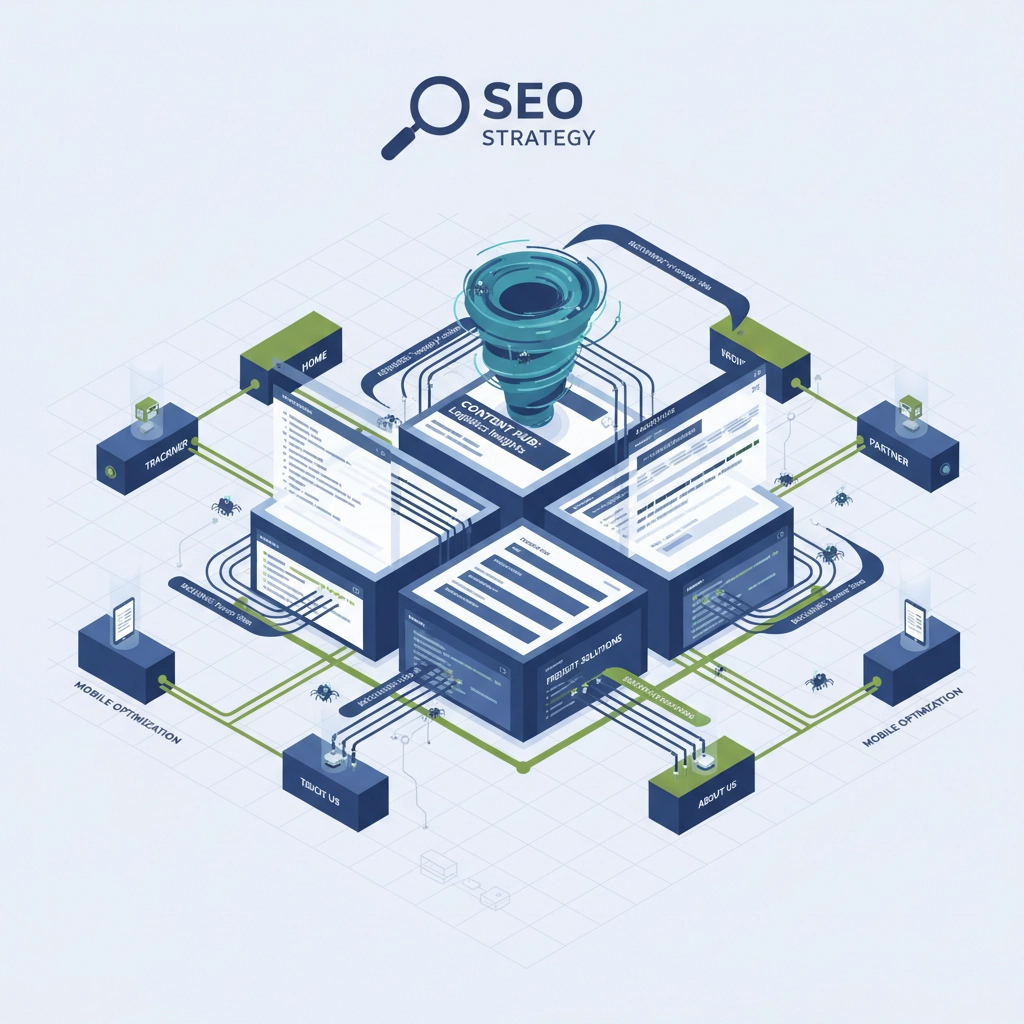
Socials Analytica: Your Partner for a Successful SEO Strategy
What this comparative analysis reveals is a universal truth of digital marketing: you can only improve what you measure. Sailing blind, without knowing your position, your weaknesses, and your competitors’ strategies, is a surefire recipe for failure.
Socials Analytica’s “Website SEO Analysis” service is designed specifically to provide this insight. As a leading SEO consulting firm, we don’t just provide raw data. Our expertise lies in:
Conduct a comprehensive assessment: We audit the technical, semantic, and popularity aspects of your website.
Analyze Your Competitive Landscape: We identify who your real online competitors are, what they do well, and where their weaknesses lie.
Identifying Opportunities: We uncover profitable keywords and content niches where you can quickly establish yourself.
Provide a clear roadmap: We translate the analysis into a concrete, prioritized, and cost-estimated action plan so you know exactly what to do to achieve results.
For a company like Alexis Logistics, investing in such an audit isn’t an expense—it’s the first step toward establishing a sustainable and profitable customer acquisition channel. It’s the investment that allows you to transform a passive website into a true sales representative that works for you 24 hours a day, 7 days a week.
Conclusion: SEO as a Driver of Digital Transformation
In conclusion, the case of Alexis Logistics is emblematic of many small and medium-sized enterprises (SMEs) in the logistics sector: strong industry expertise, but a weak digital presence that is holding back their growth. Competitive analysis shows that a huge gap separates them from the leaders, but it also reveals a clear path to bridging that gap. By drawing on the expertise of a firm like Socials Analytica to assess the situation and define a strategy, it is entirely possible to turn this disadvantage into an opportunity to gain new market share.
A professional SEO audit is not a luxury but a strategic necessity for any company in the transportation and logistics sector that wants to thrive in the digital economy. It reveals not only where you stand, but more importantly, where you can go and how to get there in practical terms.