



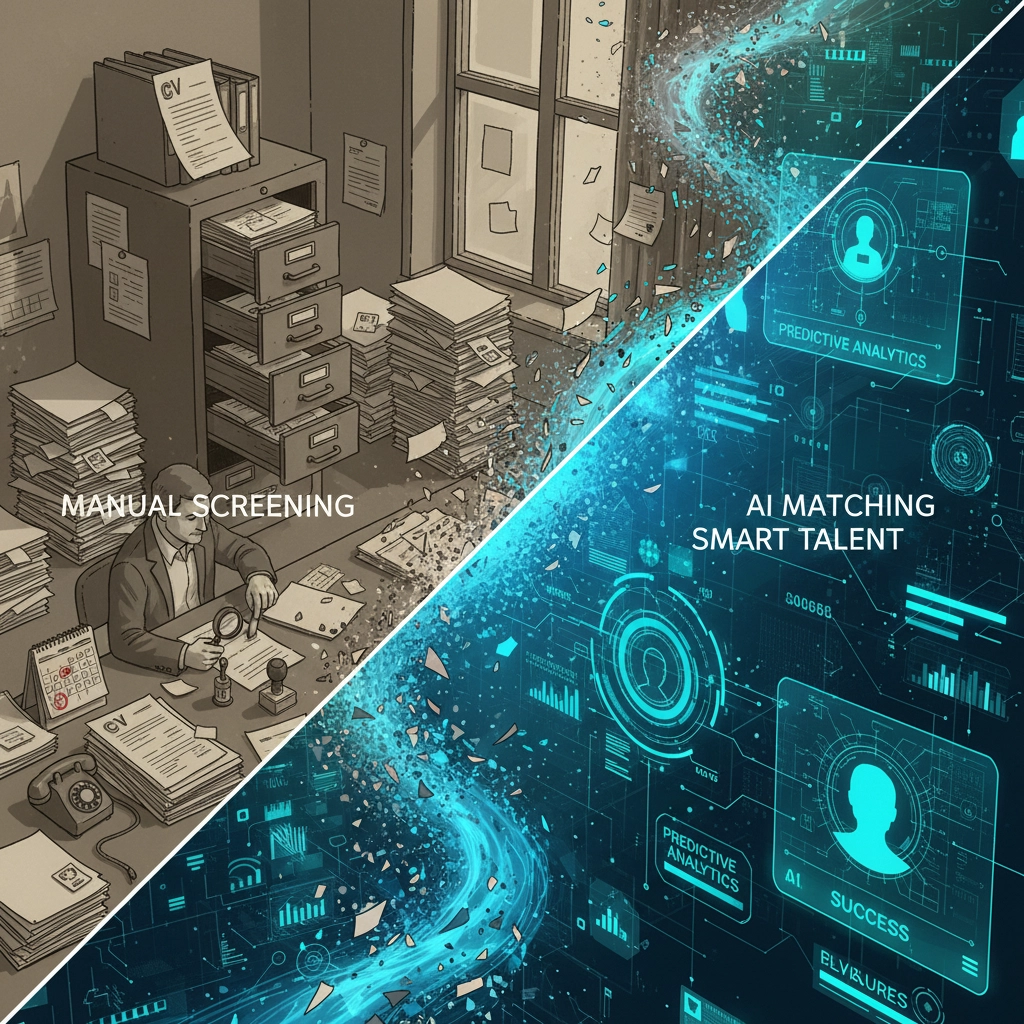
The world of recruitment is undergoing a quiet but profound revolution. By 2025, traditional sourcing and onboarding methods will gradually give way to solutions powered by artificial intelligence. This transformation is no longer the stuff of science fiction: it is already redefining the way companies attract, evaluate, and onboard their future employees.
For both small and medium-sized businesses and large corporations, this trend represents a major opportunity to rethink their HR strategies. AI promises not only to speed up processes, but also to improve the quality of hiring and the candidate experience. Let’s explore together how these technologies are actually transforming the recruitment landscape.
Intelligent Sourcing Automation: Beyond Resumes
Predictive Hiring in Action
Artificial intelligence is revolutionizing the sourcing phase by introducing the concept of predictive hiring. Unlike traditional approaches, which simply analyze resumes, modern algorithms scrutinize a multitude of signals to identify the ideal candidates.
Let’s take the example of a tech company looking for a senior developer. The AI will analyze not only the technical skills listed on the resume, but also:
- Activity on GitHub and other development platforms
- Contributions to open-source projects
- Participating in technical communities on Stack Overflow
- Certifications obtained and their recency
- Career patterns indicating consistent progression
This holistic approach makes it possible to identify hidden talents that traditional methods would have overlooked.

Automated Multichannel Sourcing
Modern AI platforms now orchestrate sourcing campaigns across multiple channels simultaneously. They can:
- Scan professional social media platforms: LinkedIn, Viadeo, or specialized communities such as AngelList for startups
- Analyze internal databases: Identify internal employees who may be eligible for promotion to new positions
- Leveraging ATS (Applicant Tracking System) Data: Reaching Out to Former Candidates Who Are Now a Good Fit for New Opportunities
- Monitoring Weak Signals: Identifying Professionals Who May Be Actively Job-Hunting Based on Their Online Activity
This automated, multi-channel approach enables recruiters to build a constantly updated talent pool, drastically reducing recruitment time.
AI-Powered Personalized Onboarding
Adaptive Learning Applied to Integration
Traditional onboarding typically follows a single path for all new employees. AI is changing this by creating adaptive onboarding paths based on each new hire’s profile, experience, and specific needs.
In practical terms, here’s how a smart onboarding system works:
- Profile Analysis: AI assesses the level of experience, existing skills, and areas for improvement
- Content Customization: Automatic Generation of Tailored Training Modules
- Real-time tracking: Dynamic adjustment of the route based on progress and challenges encountered
- Continuous Feedback: Automatically Collect Feedback to Improve the Experience
Support Chatbots
Virtual assistants are becoming indispensable companions for new employees. These smart chatbots can:
- Answer administrative questions 24 hours a day
- Provide guidance on internal procedures
- Automatically schedule appointments with various departments
- Offer personalized training content
- Gather feedback on the onboarding experience
For example, the French company Qonto uses a chatbot called “Qbot” that supports each new employee during their first few months, reducing the number of questions directed to the HR teams by 40%.

Practical Technologies: From Theory to Practice
Natural Language Processing (NLP) in Recruitment
Automated natural language processing now makes it possible to accurately analyze:
- Unstructured Resumes: Automatic Extraction of Skills, Experience, and Education
- Cover Letters: Analysis of Tone, Motivation, and Cultural Fit
- Video Interviews: Transcription and Semantic Analysis of Responses
- Written Assessments: Automatic Grading and Evaluation of Writing Skills
Predictive Performance Analysis
Machine learning algorithms analyze the correlations between candidate profiles and their future performance. This approach makes it possible to:
- Predicting how long a candidate will stay
- Assessing Your Career Growth Potential
- Identify high-potential candidates
- Optimize the allocation of training budgets
A study conducted by IBM shows that companies using AI in their recruitment process improve the quality of their hires by 35% and reduce recruitment time by 50%.
Real-World Use Cases by Industry
The Technology Sector: The Case of Google
Google uses a system called “gHire” that analyzes more than 300 variables to predict a candidate’s success. The system evaluates:
- Technical Skills Through Automated Testing
- Innovation capacity as measured by an analysis of past projects
- Cultural Fit Through the Analysis of Behavioral Responses
Retail: Unilever’s Approach
Unilever has completely revamped its recruitment process for recent graduates:
- Phase 1: Online games that assess cognitive abilities and personality
- Phase 2: Video interviews analyzed by AI to assess soft skills
- Phase 3: Virtual assessment day with role-playing exercises
This approach has reduced recruitment time by 75% while increasing the diversity of the candidates hired.
Banking Sector: Innovation at JPMorgan Chase
The U.S. bank uses AI to analyze internal emails and identify employees who are likely to leave the company. This predictive approach makes it possible to:
- Planning for Departures
- Offer customized retention plans
- Identify future internal talent
The Challenges of AI in Recruitment
Algorithmic Bias and Fairness
Automation raises crucial questions about fairness and non-discrimination. Algorithms can replicate—or even amplify—human biases present in training data. To avoid these pitfalls, companies must:
- Regularly audit their algorithms
- Diversify their training data
- Maintain human oversight in final decisions
- Comply with regulations such as the GDPR in Europe
Privacy Policy
The widespread use of personal data in recruitment raises privacy concerns. Companies must ensure that they:
- Collect only the necessary data
- Clearly inform applicants about how their data will be used
- Enable the exercise of the rights of access, rectification, and erasure
- Ensuring the Security of Information Storage and Processing
People at the Heart of Transformation
The Evolving Role of Recruiters
Automation does not replace recruiters; it transforms their role. HR professionals are becoming:
- Strategists: Defining Criteria and Objectives
- Consultants: Supporting managers in their decision-making
- Enablers: Continuous improvement of processes and the candidate experience
- Ethicists: Guardians of Fairness and Compliance
The Importance of the Candidate Experience
AI helps create a more seamless and personalized candidate experience:
- Streamlined Application Process
- Transparent Communication on Progress
- Constructive feedback, even in the event of a rejection
- Meeting Stated Deadlines
This improvement in the employee experience directly impacts the employer brand and the ability to attract top talent.
Toward a Hybrid and Responsible Approach
The Balance Between Automation and Human Interaction
The most successful companies adopt a hybrid approach that combines:
- Automation for Repetitive Tasks and Data Analysis
- Human Intelligence for Strategic Decision-Making and the Assessment of Soft Skills
- Personalized interaction at key points in the process
ROI Measurement and Continuous Improvement
Implementing AI solutions in recruitment requires rigorous tracking of metrics:
- Reduced recruitment times
- Improving the Quality of Hiring
- Reduction in early employee turnover
- Candidate and Manager Satisfaction
- Return on Investment for the Deployed Tools

Essential Tools and Platforms
All-in-one solutions
- Workday: A Comprehensive Platform with AI for Sourcing and Onboarding
- SuccessFactors (SAP): HR suite with intelligent recruitment modules
- BambooHR: A Solution Tailored for Small and Medium-Sized Businesses with Accessible AI Features
Specialized Tools
- HireVue: Video Interviews Analyzed by AI
- Pymetrics: Assessing Soft Skills Through Neuroscience-Based Games
- Textio: AI-Powered Optimization of Job Postings to Attract a Diverse Workforce
- Hired: An automated matching platform for candidates and companies
Emerging French Solutions
- CleverConnect: An AI-powered recruitment platform developed in France
- LumApps: Social and Collaborative Onboarding Solution
- Reminder: AI for Profile Analysis and Matching
The Near Future: Around 2030
Emerging Trends
- The Metaverse and Virtual Recruitment: Interviews and Assessments in Immersive Environments
- Emotional AI: Analysis of Microexpressions and Body Language
- Blockchain for Verification: Secure Authentication of Degrees and Work Experience
- Continuous Recruitment: Proactive Talent Identification Even When There Are No Open Positions
Impact on the organization
Companies will need to adapt their organizational structures to take advantage of these innovations:
- Training HR Teams on New Tools
- Changes in Decision-Making Processes
- Stronger Collaboration Between IT and HR
- Comprehensive Digital Transformation of Support Functions
Practical Recommendations for Businesses
Phase 1: Assessment and Strategy
- Audit of Existing Processes: Identify Bottlenecks and Opportunities for Improvement
- Setting Objectives: Clarify the KPIs to be improved (time, quality, costs, experience)
- Technology Readiness Assessment: Ensuring Compatibility with Existing Systems
Phase 2: Phased Implementation
- Pilot on a limited scale: Test solutions on a specific job type or in a specific region
- Team Training: Supporting Change Through Tailored Training Programs
- Measurement and Adjustment: Track Results and Optimize Settings
Phase 3: Deployment and Optimization
- Gradual expansion: Expand the scope based on the results obtained
- Integration with the HR ecosystem: Connecting with talent management tools
- Continuous Innovation: Staying Attuned to Technological Advances
Summary: AI as a Catalyst for HR Transformation
Automating sourcing and onboarding through AI is much more than just a technological optimization. This transformation fundamentally redefines the HR function, enabling it to shift from an administrative role to a strategic one.
Companies that adopt these technologies in a thoughtful and ethical manner will have a decisive competitive advantage in the war for talent. The goal is not to replace humans with machines, but to create a symbiotic relationship in which technology enhances human capabilities.
To successfully navigate this transformation, organizations must invest simultaneously in technology, training their teams, and evolving their corporate culture. The future of recruiting will be hybrid: intelligent thanks to AI, yet deeply human in its values and goals.
At Socials Analytica, we support companies through this digital transformation, particularly in optimizing human resources and automating workflows. Our expertise enables us to guide you in implementing AI solutions tailored to your specific challenges in recruiting and onboarding talent.
