
Digital transformation is no longer an option in 2025—it is a strategic necessity. According to a McKinsey study, 75% of European companies that have invested heavily in AI and automation have seen their revenue increase by more than 20% in two years. This technological revolution is completely redefining traditional business models and opening up unprecedented opportunities for organizations that know how to seize them.
Artificial Intelligence: A Catalyst for Data-Driven Growth
Predictive Analytics and Strategic Decision Support
AI is radically transforming the way companies use their data. Unlike traditional approaches, which merely analyze the past, machine learning algorithms make it possible to anticipate future trends with remarkable accuracy.
Real-world example: Carrefour uses predictive models to forecast demand for more than 80,000 product SKUs. Their system analyzes weather data, local events, sales history, and seasonal trends to automatically optimize orders. Result: a 15% reduction in food waste and a 12% improvement in product availability.
This analytical capability enables executives to make informed decisions based on reliable projections rather than intuition. As a result,customer data analysis becomes a key strategic driver.

Large-Scale Customization
AI makes it possible to create hyper-personalized experiences for each customer, even with a user base of several million. Recommendation algorithms analyze behavior, preferences, and history in real time to provide tailored offers.
Netflix is the perfect example: its recommendation algorithm generates more than 80% of the content viewed on the platform. Each user sees a different interface, tailored to their tastes, which maintains an exceptional engagement rate and significantly reduces the churn rate.
This personalized approach also applies to digital marketing, where advertising campaigns automatically adapt to each prospect’s profile.
Intelligent Automation: Optimizing Operational Efficiency
Automation of Administrative and Financial Processes
Robotic Process Automation (RPA) combined with AI is revolutionizing administrative management. Repetitive and time-consuming tasks can now be fully automated with greater reliability than human intervention.
Case study at Danone: The company has automated 70% of its invoicing processes using AI. The system automatically recognizes incoming documents, extracts the relevant data, verifies it against purchase orders, and generates invoices. Processing time has been reduced from 3 days to 2 hours, with the error rate reduced by a factor of 10.
This automation also extends to cash management, where AI can predict cash flows and automatically optimize financial investments.
Supply Chain Optimization
AI is transforming logistics by optimizing every link in the supply chain. Algorithms continuously analyze inventory levels, predict demand, and optimize delivery routes.
Amazon takes this approach to the extreme with its forecasting system: AI predicts which products will be ordered in each region and pre-positions them in local warehouses even before orders are placed. This approach reduces delivery times by 40% while lowering logistics costs.

Revolutionizing the Customer Experience with Conversational AI
Chatbots and Intelligent Virtual Assistants
Chatbots powered by generative AI are transforming customer service by providing contextual and natural responses. Unlike older chatbots with limited scripts, these new virtual assistants understand the nuances of language and can handle complex conversations.
Sephora has developed a virtual assistant that analyzes customers’ skin using their smartphone’s camera, recommends suitable products, and even offers personalized makeup tutorials. This system generates 35% of the brand’s digital traffic and has a conversion rate 25% higher than other channels.
Social media management also benefits from these advancements, with automated yet personalized responses to comments and private messages.
Sentiment Analysis and Social Listening
AI makes it possible to automatically analyze thousands of mentions of your brand on social media, forums, and review sites. It detects not only the volume of conversations but, more importantly, their emotional tone.
Air France-KLM uses this technology to identify dissatisfied passengers on Twitter in real time and proactively offer them assistance. This approach has reduced escalations to traditional customer service by 40% and significantly improved customer satisfaction.
Technology Integration: ERP at the Heart of Transformation
Real-time data synchronization
The integration of AI with ERP (Enterprise Resource Planning) systems creates a unified technology ecosystem where all company data is synchronized in real time. This centralization provides a comprehensive and instantaneous view of business operations.
SAP Leonardo is a perfect example of this approach: the platform integrates AI directly into the ERP system to automate accounting, predict maintenance needs, and optimize production planning. Companies using this solution report a 30% improvement in their operational productivity.
This integration also facilitatesthe optimization of human resources by automatically analyzing workloads and suggesting an optimal distribution of tasks.
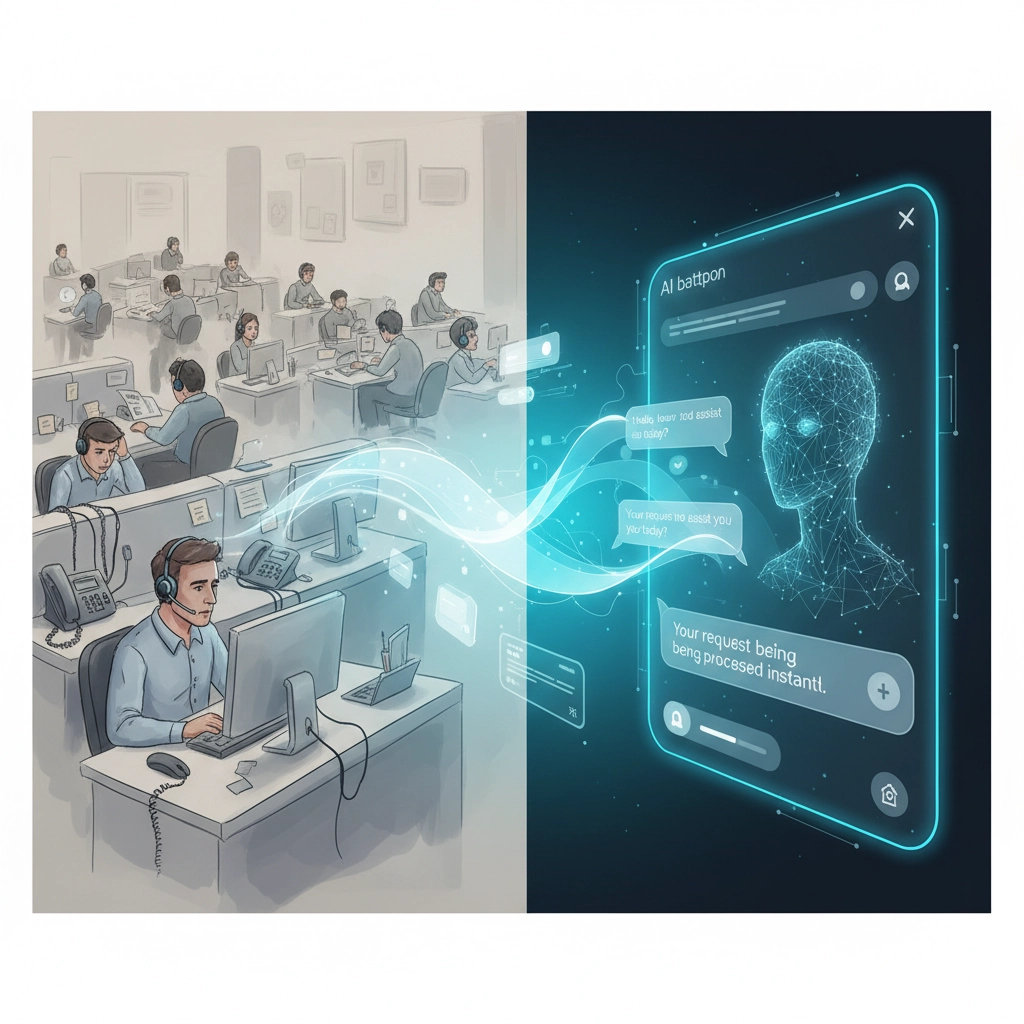
Automation of Business Workflows
AI can automatically analyze and optimize existing business processes. It identifies bottlenecks, suggests improvements, and automates the most repetitive workflows.
Example from Schneider Electric: AI analyzes customer order approval processes and has identified 12 redundant steps. Automating these workflows reduced processing time from 5 days to 24 hours, while freeing up 40% of the sales teams’ time to focus on prospecting.
Security and Risk Management: AI as a Digital Shield
Real-Time Fraud Detection
AI is revolutionizing cybersecurity by continuously analyzing suspicious behavior and detecting anomalies that would escape human detection. The algorithms are constantly learning new attack methods to enhance their effectiveness.
Visa processes more than 150 million transactions per day through its AI-powered VisaNet system. The system instantly analyzes 500 variables per transaction (geolocation, purchase history, time, amount, etc.) and automatically blocks suspicious transactions with a false positive rate of less than 0.1%.
This approach also applies to securing customer data, where AI can detect unauthorized access attempts or potential data breaches.
Automated Regulatory Compliance
AI greatly simplifies regulatory compliance by automating monitoring and reporting. It can analyze complex regulations and automatically ensure that business processes remain compliant.
HSBC uses AI to combat money laundering: the system automatically analyzes millions of daily transactions, identifies suspicious patterns, and generates the required regulatory reports. This automation has reduced the compliance teams’ workload by 75%.
ROI and Performance Metrics: Measuring the Impact of Transformation
Key performance indicators
Digital transformation must be measurable to justify the investments. Key KPIs include:
Operational Productivity: Amazon Web Services reports that its customers using AI see an average 25% improvement in productivity within 18 months of implementation.
Cost reduction: McDonald’s has automated 80% of its inventory management processes using AI, generating 200 million euros in annual savings worldwide.
Improving customer satisfaction: Spotify uses AI to personalize playlists for 400 million users, maintaining an 85% retention rate (compared to an industry average of 60% in the music industry).

Calculating Return on Investment
The ROI of AI is calculated based on several factors:
- Direct savings: automation of repetitive tasks
- Revenue Generation: Personalization and New Services
- Risk Mitigation: Fraud Detection and Enhanced Security
- Competitive Advantage: Differentiation Through Innovation
A concrete example from L’Oréal: a 50 million euro investment in AI generated 300 million euros in additional revenue over three years, representing a 600% ROI. This performance can be attributed to improved product personalization and optimized marketing campaigns.
Industry-Specific Use Cases: Practical Applications by Industry
Banking and Financial Sector
Banks are using AI to transform their customer relationships and optimize risk management. BNP Paribas has developed a virtual advisor that automatically analyzes customers’ financial situations and recommends tailored products. The system generates 40% of new mortgage applications.
AI also makes it possible to automateauditing and advisory services by automatically analyzing financial statements and identifying potential anomalies.
Retail and E-commerce
Zalando uses AI to predict fashion trends six months in advance. The system analyzes social media, fashion shows, Google searches, and historical sales data to anticipate which products will be successful. This approach has reduced unsold inventory by 30% while increasing sales by 18%.
Manufacturing Industry
General Electric has equipped its turbines with AI for predictive maintenance. Sensors continuously analyze vibrations, temperatures, and other parameters to predict failures before they occur. This approach reduces downtime by 70% and maintenance costs by 25%.

Challenges and Best Practices for a Successful Transformation
Change Management and Team Training
The success of digital transformation depends largely on team buy-in. Microsoft recommends allocating 20% of the transformation budget to training and change management.
Take Renault, for example: the company created an in-house “AI University” to train 15,000 employees on the new tools. This approach led to AI solutions being adopted three times faster than in previous projects.
The transformation of internal processes must be accompanied by changes in skills and work methods.
Phased Deployment Strategy
It is crucial to take a pragmatic approach by conducting pilot projects before rolling out the technology on a large scale. Airbus tested AI on a single production line before expanding it to all of its plants, thereby avoiding the risks associated with a too-abrupt transformation.
The key to success lies in identifying high-value, low-risk use cases to start with, and then gradually expanding to more complex applications.
Future Outlook: Toward the Autonomous Enterprise
The Rise of Generative AI in the Corporate World
The rise of generative AI (such as ChatGPT, Claude, or Gemini) is opening up new possibilities for automating creative and cognitive tasks. Klarna has replaced 700 customer service agents with an AI chatbot that now handles 2.3 million conversations per month with the same level of customer satisfaction.
This shift towardAI and customer relationship management is fundamentally transforming traditional business models.
Toward the Self-Learning Organization
The ultimate goal of digital transformation is to create learning organizations that improve automatically. Tesla exemplifies this vision with its vehicles, which collectively learn from every kilometer traveled by its global fleet, continuously improving their performance.
This approach can be applied to all sectors: a logistics company whose algorithms automatically optimize delivery routes, or a bank whose AI constantly refines its risk models.
Summary: The Keys to a Successful Digital Transformation
Digital transformation driven by AI and automation is an essential strategic investment for remaining competitive. Companies that successfully navigate this transition share several common characteristics:
A clear strategic vision: set specific, measurable goals rather than following technological trends.
Data-driven approach: Invest in data quality and governance before deploying AI.
Effective change management: supporting teams through this technological and cultural transition.
Phased rollout: Start with simple, high-value use cases before rolling out the solution more widely.
Performance measurement: Closely track ROI and adjust the strategy based on the results.
The question is no longer whether AI will transform your industry, but how quickly you can adapt to take advantage of it. Companies that embed these technologies into their DNA now will gain a decisive edge over their competitors. Digital transformation is not a project with a defined end point, but an ongoing process of improvement and innovation that constantly redefines the standards for performance and agility.
At Socials Analytica, we support companies through this crucial transition by combining technological expertise with business knowledge to maximize the impact of your digital transformation.