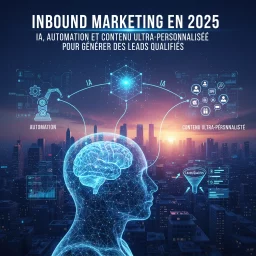
Inbound marketing is undergoing a quiet but powerful revolution. Gone are the days when brands bombarded their prospects with sales messages in the hope of landing a few conversions. Welcome to the era of authentic relationships, where every interaction counts and where people are once again at the heart of marketing strategy.
This transformation is not merely a passing trend, but an economic and ethical necessity. Today’s consumers overwhelmingly reject intrusive approaches and favor brands that speak to them with sincerity and respect.
![image_1]()
 Even more telling: 59% of sales teams prefer to work with leads generated through inbound marketing, compared with just 16% who prefer outbound leads. This overwhelming preference among salespeople themselves attests to the superior quality of prospects attracted organically.
![image_2]()
![image_3]()

![image_4]()
![image_5]()

The Consumer Awakening: Why the Human Approach Wins
The numbers speak for themselves: inbound marketing is 10 times more effective at converting leads than traditional outbound methods. This exceptional performance can be attributed to a simple yet revolutionary factor: trust. When a brand invests time and resources in educating, informing, and supporting its prospects without expecting an immediate return, it creates an emotional bond that is hard to break. Marketers who adopt this philosophy see their conversion rates double, rising from 6% to 12% on average.
Even more telling: 59% of sales teams prefer to work with leads generated through inbound marketing, compared with just 16% who prefer outbound leads. This overwhelming preference among salespeople themselves attests to the superior quality of prospects attracted organically.
The Four Pillars Reinvented: From Attraction to Ambassadorship
Modern inbound marketing is built on four fundamental pillars, but the way these pillars are interpreted is evolving toward a more human and personalized approach.1. Attract with Empathy
The appeal no longer lies in creating general content in the hope of reaching a broad audience. It’s now about developing a deep understanding of your audience’s specific challenges so you can offer concrete, actionable solutions. This phase focuses on creating high-value content that addresses the real concerns of prospects. SEO optimization then becomes a natural outcome, as it stems from genuinely useful content.2. Convert Through Trust
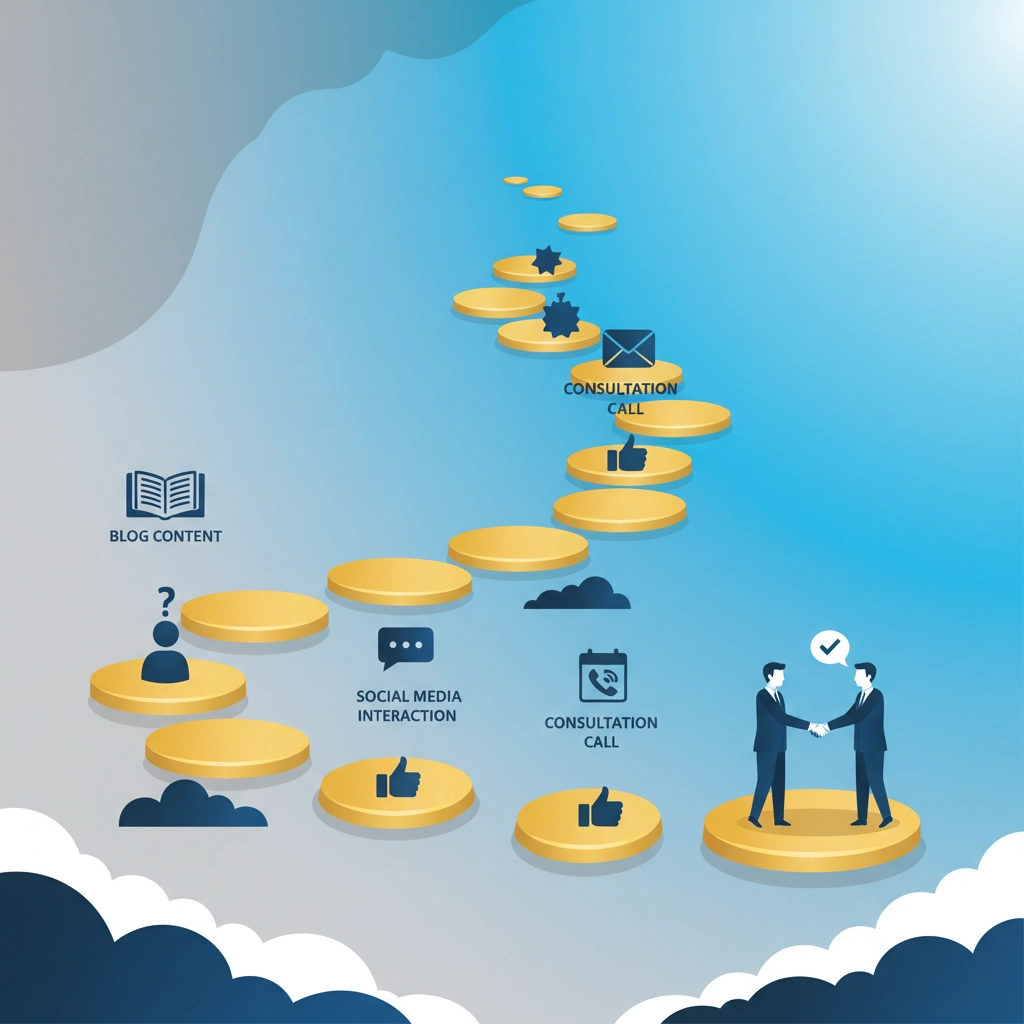
Modern conversion strategies move away from intrusive forms and aggressive calls to action in favor of fair exchanges. Prospects agree to share their contact information only if they perceive immediate and tangible value. This approach requires a sophisticated digital marketing strategy that coordinates every touchpoint to maximize trust before conversion.
3. Conclude with Respect
The closing phase respects the prospect’s natural decision-making process. Rather than forcing a sale, it supports the prospect’s decision-making by providing the necessary information at the right time. Marketing automation plays a crucial role here, making it possible to maintain a personalized dialogue on a large scale without losing the authenticity of the relationship.4. Build Loyalty to Drive Transformation
Customer loyalty goes far beyond customer satisfaction; its goal is to turn customers into genuine brand advocates. This phase fosters an engaged community that becomes the company’s best channel for growth.Technology in the Service of Humanity
Lead Nurturing: Building Relationships
Modern lead nurturing prioritizes quality over quantity. Rather than sending generic newsletters, the goal is to create personalized content journeys that evolve with each prospect’s needs and level of maturity. This approach adheres to the fundamental principle of inbound marketing: providing value before asking for anything in return. Every interaction reinforces the brand’s credibility and expertise.Artificial Intelligence: Personalization on a Human Scale
AI and customer relationship management are revolutionizing personalization by enabling the analysis of individual behaviors and preferences to automatically tailor the content and timing of interactions. Paradoxically, this advanced technology makes it possible to return to a more human approach by restoring the relevance and personalization of interactions.
Social Selling: Selling Through Service
Social selling represents the natural evolution of sales prospecting. This approach emphasizes sharing expertise and creating value on social media before engaging in any direct sales efforts. Social media optimization (SMO) thus becomes a powerful tool for establishing authority and naturally attracting qualified leads.The Economic Advantage of Authenticity
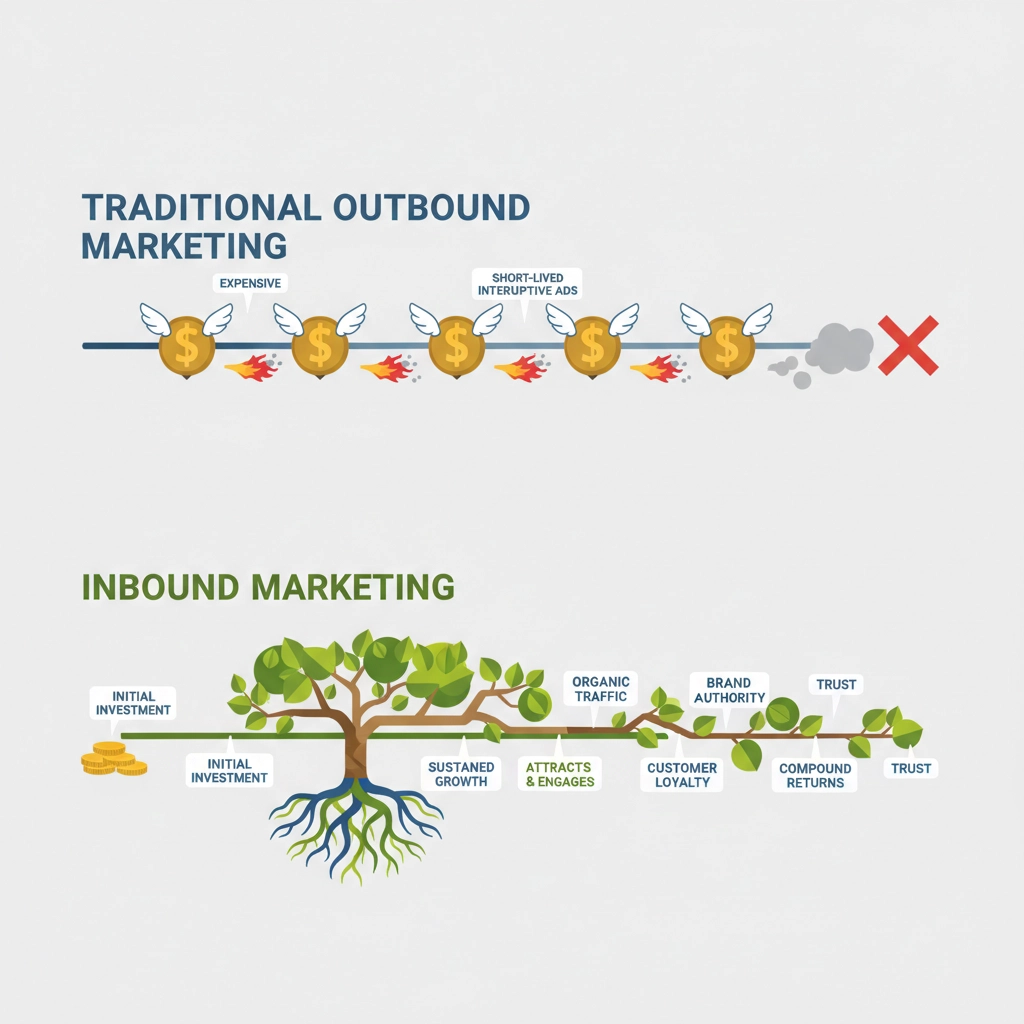
This relationship-based approach does not come at the expense of financial performance—quite the contrary. Companies that use inbound marketing spend $14 less per new lead and generate 54% more leads compared to outbound methods. The cost per lead ranges from $75 to $150 for inbound marketing, compared to $200 to $500 for outbound marketing. This cost-effectiveness can be attributed to the longevity of the assets created: high-quality content continues to attract organic traffic for months, even years.The Winning Synergy: Allbound Marketing
The future does not lie in the contrast between inbound and outbound, but in their intelligent synergy. Companies that combine these approaches into an “allbound” strategy grow their revenue 27% faster than those that use only one. This hybrid approach uses inbound marketing to build trust and qualify leads, then employs targeted outbound techniques to accelerate the conversion of the most mature leads.
Case Study: The Transformation of an SME
Let’s take the example of a B2B services SME that adopted this approach. By moving away from mass email campaigns in favor of a personalized content strategy, the company saw its open rate rise from 15% to 45% and its conversion rate triple in six months. The key to this transformation? A thorough audit and consulting process to identify the real concerns of its target audience, followed by a complete overhaul of its content strategy.The Metrics That Really Matter
With this new approach, KPIs are also changing. Beyond the number of leads generated, we need to measure:- Content engagement rate
- Time spent on site
- The number of meaningful social interactions
- The Average Sales Cycle
- Customer Lifetime Value (LTV)
- The Net Promoter Score (NPS)
Toward a New Definition of ROI
Return on investment is no longer calculated based solely on immediate conversions. The value of an inbound strategy also lies in:- Building a High-Quality Database
- Enhancing Brand Awareness and Authority
- Creating Sustainable Content Assets
- Building a Committed Community
- Reducing long-term acquisition costs