



Growth hacking is much more than just a marketing buzzword: it’s a systematic methodology that combines creativity, data analysis, and experimentation to drive rapid and sustainable growth. For French SMEs, this approach is becoming all the more crucial as it allows them to optimize marketing budgets while maximizing results. With the emergence of artificial intelligence, growth hacking is reaching new heights of effectiveness and accessibility.
![image_1]()

![image_2]()
 Implementation example: A digital transformation company can use AI chatbots to automatically qualify leads and tailor its sales pitch based on their industry and digital maturity.
![image_3]()

![image_4]()
![image_5]()

Understanding Growth Hacking: Beyond Traditional Marketing
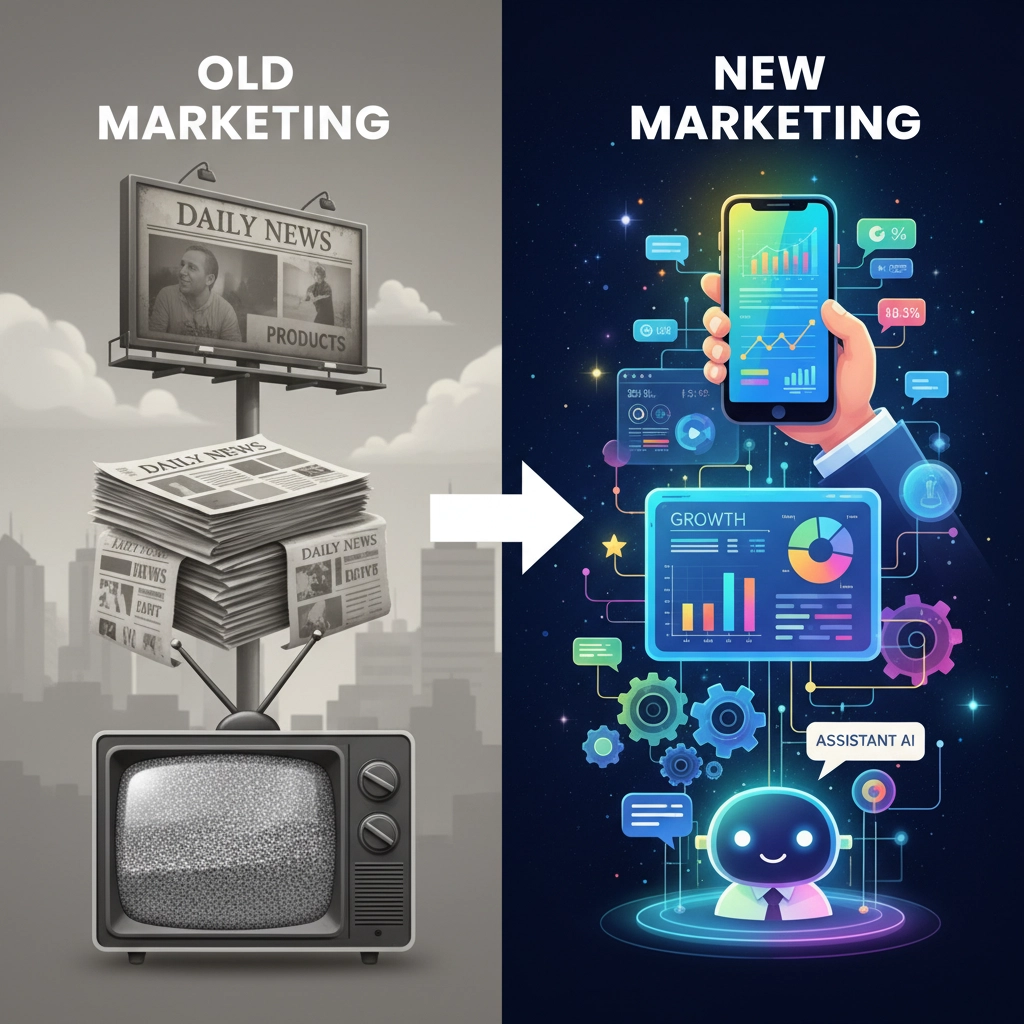
Growth hacking differs from traditional marketing in its data-driven approach and its ability to identify the most effective growth drivers at the lowest cost. Unlike traditional marketing strategies, which rely on substantial budgets, growth hacking emphasizes ingenuity and experimentation. This methodology is based on the AARRR framework (Acquisition, Activation, Retention, Referral, Revenue), which helps optimize every stage of the customer journey. For an SME, this means being able to compete with companies that have marketing budgets ten times larger by making smart use of available data and technological tools.
Notable Case Studies: Lessons from the Giants
Gmail and the Exclusivity Strategy
Gmail remains a benchmark for psychological growth hacking. In 2004, Google launched its email service with an exclusive invitation-only system. This strategy of creating artificial exclusivity sparked such a powerful FOMO (Fear of Missing Out) phenomenon that Gmail invitations were being sold on eBay. Lessons for SMBs: Exclusivity works particularly well for B2B services or professional communities. A digital marketing agency can apply this technique by offering early access to its new services or by hosting private masterclasses.Dropbox: The Referral Program That Defies the Math
Dropbox revolutionized the concept of referrals with a system in which both the user and their referrer received free storage space. Faced with a customer acquisition cost of €250 to generate €99 in revenue, this strategy enabled them to grow from 100,000 to 4 million users in twelve months. Practical Application: A small or medium-sized consulting firm can implement a similar system by offering free consultation hours for each new client referred to them. The initial investment of time quickly translates into recurring revenue.Airbnb and the Use of Existing Platforms
The founders of Airbnb developed a system to automatically repost their listings on Craigslist, tapping into an existing audience. This technical integration allowed them to reach millions of daily visitors on Craigslist without spending any money on advertising. Strategy for SMEs: Identify the platforms where your audience is and automate the distribution of your content. For a human resources consulting firm, this could mean automating the posting of job openings on several specialized websites.AI Is Revolutionizing Growth Hacking
Predictive Analytics and Intelligent Segmentation
Artificial intelligence is radically transforming growth hackers’ analytical capabilities. Machine learning algorithms can now identify hidden patterns in behavioral data, making it possible to predict which prospects are most likely to convert. Practical tools:- Mixpanel uses AI to identify events that predict churn
- Amplitude offers automated cohort analyses
- Hotjar combines heat maps and AI to optimize user journeys
Large-Scale Dynamic Personalization
AI makes it possible to personalize the user experience in real time, tailoring content, offers, and even the interface to each visitor’s behavioral profile. This personalization, once reserved for large companies, is now becoming accessible to small and medium-sized businesses thanks to SaaS platforms.
Implementation example: A digital transformation company can use AI chatbots to automatically qualify leads and tailor its sales pitch based on their industry and digital maturity.
Intelligent Campaign Automation
Marketing AI platforms now make it possible to fully automate growth hacking campaigns, from content creation to ad bid optimization. This automation frees up time to focus on strategy and experimentation.Essential AI Tools for Small and Medium-Sized Businesses
Marketing Automation Platforms
HubSpot with AI: Includes predictive scoring, automatic email campaign optimization, and content recommendations. For an SMB, the initial investment (starting at €45/month) quickly pays for itself through improved conversion rates. ActiveCampaign: Uses AI to optimize send times, automatically segment contacts, and predict the likelihood of a purchase. Particularly effective for B2B lead nurturing strategies.Artificial Intelligence for Content
Copy.ai and Jasper: Automatically generate content variations for A/B testing, create optimized landing pages, and tailor the tone to the target audience. Surfer SEO: Uses AI to analyze competitors’ pages and generate recommendations for SEO-optimized content. Essential for a data-driven SEO strategy.
Advanced Behavioral Analysis
Crazy Egg with AI: Automatically identifies friction points on a website and suggests optimizations based on behavioral analysis of millions of users. Google Analytics 4 with Intelligence: Provides automated insights into traffic anomalies, growth opportunities, and high-potential audience segments.Implementation Guide for Small and Medium-Sized Businesses
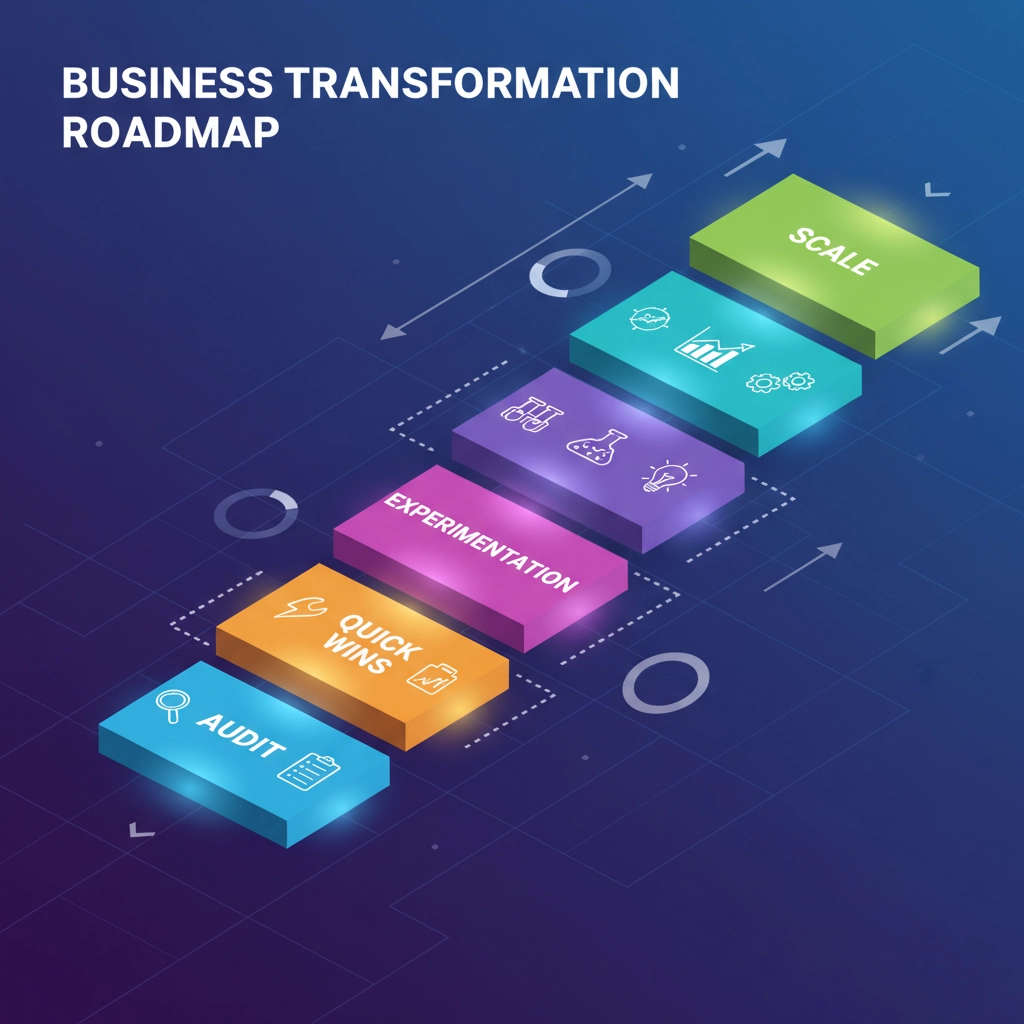
Phase 1: Audit and Baseline (Weeks 1–2)
Step 1: Install the essential tracking tools- Google Analytics 4 with Enhanced Ecommerce
- Facebook Pixel and Google Tag Manager
- Heatmap tool (Hotjar or Crazy Egg)
- Customer Acquisition Cost (CAC)
- Lifetime Value (LTV)
- Conversion Rate by Channel
- Monthly Retention Rate
Phase 2: Identifying Quick Wins (Weeks 3–4)
Data Analysis: Use AI to identify patterns in existing data. Google Analytics Intelligence can automatically detect anomalies and opportunities. Prioritize A/B testing: Start by testing high-impact elements:- Landing Page Headlines
- Call to action (color, text, position)
- Contact Forms (Number of Fields)
Phase 3: Systematic Testing (Weeks 5–12)
Experimentation Framework: Implement a weekly testing process that includes:- A clear and measurable hypothesis
- Defined Success Metrics
- Optimal test duration (calculated statistically)
- Chatbots for Lead Qualification
- Behavior-Based Email Automation
- Customizing Website Content
Phase 4: Scaling and Optimization (Months 3–6)
Advanced Integration: Connect all tools within a cohesive ecosystem that enables automatic data transfer between platforms. Predictive Models: Develop customer scoring models based on historical data to optimize the allocation of sales resources.Measuring the ROI of AI-Driven Growth Hacking
Direct Financial Metrics
- Reducing Customer Acquisition Cost (CAC ): AI typically reduces customer acquisition costs by 20–40% through better lead qualification and more precise targeting.
- Increased LTV: Personalization and intelligent automation increase customer lifetime value by an average of 25–35%.
- Time to profitability: SMEs generally see a positive return on investment within 3 to 6 months.
Operational Indicators
- Experimentation Velocity: Number of tests conducted per month
- Experiment success rate: Percentage of tests that result in a significant improvement
- Implementation time: The time between the initial idea and the implementation of a test
Avoiding Common Pitfalls
Magic Tool Syndrome
AI is not a magic bullet. It enhances existing strategies but does not replace strategic thinking and market knowledge. An SME must first master the fundamentals of digital marketing before integrating AI.Neglect of Data Quality
The effectiveness of AI depends entirely on the quality of the data. Investing in a system for collecting and cleaning data is crucial before implementing advanced AI solutions.Premature Optimization
Start with simple tests and accessible tools before moving on to complex solutions. A gradual approach allows you to learn and adapt your strategy to the specific needs of your company.Emerging Trends and Future Outlook
The future of AI-driven growth hacking is moving toward real-time hyper-personalization, where every customer interaction is instantly optimized by machine learning algorithms. Small and medium-sized businesses that master these tools now will have a lasting competitive advantage. The integration of conversational AI (ChatGPT, Claude) into growth hacking processes opens up new possibilities: automatic generation of creative variations, semantic analysis of customer feedback, and automatic optimization of conversion paths.Summary and Action Plan
AI-powered growth hacking presents an exceptional opportunity for small and medium-sized businesses to compete with companies that have substantial marketing budgets. The key to success lies in a methodical approach: start with the basics, experiment systematically, and gradually integrate AI tools. Immediate Action Plan:- Assess the current situation and define baseline KPIs
- Implement essential tracking tools
- Launch the first A/B tests on high-impact elements
- Gradually integrate automation and AI
- Continuously measure, adjust, and optimize
