Forget everything you knew about SEO. In 2026, SEO will no longer be a race for keywords or the number of backlinks. Yoast experts Alex Moss and Carolyn Shelby have just published their predictions for the year, and the verdict is clear: visibility is now defined by clarity, authority, and trust —not by traditional rankings.
The era of generative AI is radically transforming the way search engines understand, evaluate, and present content. Google, Bing, and their competitors no longer simply read your pages—they interpret them, cite them, and reuse them in automatically generated responses. This is a complete paradigm shift.
🎯 Key Takeaways
| Prediction | Business Impact |
|---|---|
| Required Structured Data | Without it, you become invisible to AI agents |
| Editorial quality = machine readability | Structure, conciseness, and clarity determine whether you are cited |
| Brand Authority > Traffic Volume | Long-term trust trumps fresh content |
| Multimodal Optimization | Images, videos, and audio are becoming objects of knowledge |
| Multichannel Visibility | Social media and reviews directly impact your SEO |
| Agent-Based Commerce | AI systems make purchases on behalf of users |
1. From Visibility Through Ranking to Visibility Through Understanding
Traditional SEO was all about climbing the search results. Position 1, position 2, position 3… It was easy to understand and measure.
In 2026, this approach falls apart. With Google’s AI Overviews and conversational assistants, users no longer scroll through a list of blue links. Instead, they get a summarized answer that may or may not cite your content.
The question is no longer, “Am I on the front page?”
But: “Is my content clear enough to be understood and cited by AI?”
This is a fundamental shift. Interpretability now takes precedence over tactical optimization.

2. Structured Data: From Competitive Advantage to Mandatory Requirement
Did you think schema markup was optional? Bad news: by 2026, it will be the gateway to AI-driven experiences.
AI systems use structured data to determine whether your content can be featured in their responses. Without proper markup, you simply don’t exist to automated agents.
Agent-Based Commerce Is Coming
This is the term that will dominate 2026: agentic commerce. AI assistants are no longer content with simply recommending products—they’re making purchases on behalf of users. And for an agent to “resolve” your entity (understand who you are, what you sell, and at what price), it needs:
- Clean, structured data
- Stable Identifiers
- Precise Ontologies
- Interconnected Knowledge Graphs
At Socials Analytica, we’re already helping our clients prepare their websites for this revolution.
3. Editorial Quality = Machine Readability
Here’s an uncomfortable truth: AI evaluates your content differently than a human reader.
Artificial intelligence systems evaluate your writing based on how effectively it conveys information. Specifically, this means:
- Clarity: No unnecessary jargon
- Structure: Hierarchical headings, bulleted lists, tables
- Conciseness: Get to the point
- Quotability: Sentences that can be excerpted and reused
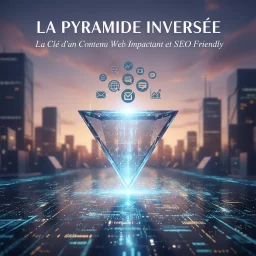
This approach aligns perfectly with the inverted pyramid method: the essential information first, followed by the details.
Pro tip: If your content takes three readings to understand, the AI will move on.

4. Multimodal Optimization Is Becoming the Standard
Images, videos, podcasts, and transcripts are no longer just SEO “bonuses.” In 2026, they are retrievable knowledge objects that fuel both traditional search and AI-powered experiences.
What this means in practice:
| Media Type | SEO Action 2026 |
|---|---|
| Images | Descriptive alt text + ImageObject structured data |
| Videos | Full transcripts + chapter breaks + VideoObject diagram |
| Podcasts | Searchable Transcripts + Enriched Metadata |
| Infographics | Alternative text version + structured markup |
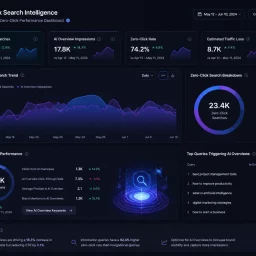
The AI settings in Search Console also let you track how these different formats perform in new search contexts.
5. Visibility Is Measured Beyond Traffic
RIP “all-traffic.” In 2026, your visibility extends far beyond clicks to your site:
- Quotes in AI responses (without a click)
- Social Media Mentions
- Interactions with Automated Agents
- Opinions and Brand Perception
You could get zero clicks and still generate massive visibility if AI cites you as a reference source.
New KPIs to track:
- Citation Frequency in AI Overviews
- Aggregate brand sentiment (Google reviews, social media, forums)
- Entity Resolution by AI Agents
- Consistency of Information Across Platforms
6. Brand Authority Replaces Traffic Volume
For years, SEO rewarded mass publishing. More articles = a better chance of ranking. Those days are over.
In 2026, entity trust becomes the primary metric for AI platforms. In other words: who you are matters more than how much you post.

How can we build this authority?
- Consistency: The Same Message Across All Channels
- Proven Expertise: Tangible Evidence of Competence
- Longevity: A Track Record of Reliability
- Transparency: Verifiable and Up-to-Date Information
That is exactly what sets apart the companies that will survive the AI transition from those that will disappear. At OpenAI itself, the struggle between monetization and quality shows just how central trust has become.
7. Brand Sentiment as an SEO Signal
Here’s a prediction that will surprise a lot of people: what people say about you online directly impacts your search engine rankings.
AI systems aggregate trust signals from:
- Google My Business Reviews
- Social Media Mentions
- Discussions on Reddit and specialized forums
- Press articles and third-party blogs
A persistent negative sentiment = a less trustworthy entity = less visibility in AI responses.
8. SEO Teams Are Becoming “Storykeepers”
The role of the SEO specialist is changing dramatically. It’s no longer just about “getting pages to rank,” but about steering the brand narrative across all touchpoints.
New Responsibilities:
- Audit the overall information architecture (not just the website)
- Ensure consistency across platforms
- Keep knowledge graphs up to date
- Monitor the interpretability of content by AI systems
Information architecture must be designed to accommodate both agents AND humans. The website becomes an enterprise system, not a collection of isolated pages.
9. Unique Content Gains Value
In a world where AI can generate endless amounts of generic content, what sets you apart?
Strong opinions, in-depth investigations, and proprietary data.
These elements are difficult (if not impossible) for generative AI to replicate. They therefore become infinitely more valuable in establishing your authority.
What Works in 2026:
✅ Original case studies with real data
✅ Clear-cut and well-reasoned viewpoints
✅ Exclusive research and proprietary surveys
✅ Verifiable human expertise
❌ Rephrased generic articles
❌ “SEO-friendly” content with no substance
❌ Lists copied from competitors
How Socials Analytica Supports You
These changes are massive, but not insurmountable. At Socials Analytica, we’re already helping companies navigate this transition to SEO 2026:
- AI Readiness Audit: Assessment of Your Structured Data and Information Architecture
- Multichannel Visibility Strategy: Aligning Your SEO with Your Social Media Presence
- Editorial Optimization: Rewriting for Machine Readability
- Advanced Monitoring: Tracking New AI Visibility KPIs
SEO in 2026 is no longer an isolated technical discipline—it is an integrated visibility system that requires cross-functional expertise.
Conclusion: Building for Interpretability
The key takeaway from Yoast’s 2026 predictions can be summed up in one sentence: Build visibility systems that search engines and AI platforms can interpret, trust, and reliably reuse.
It’s no longer the time to react to updates on a case-by-case basis. Now is the time to build a solid foundation: structured data, brand authority, clear content, and multichannel consistency.
The companies that get started now will be the ones that dominate visibility in 2026. The others… may simply become invisible.
Ready to develop your SEO strategy for the age of AI? Contact the Socials Analytica team for a personalized audit.