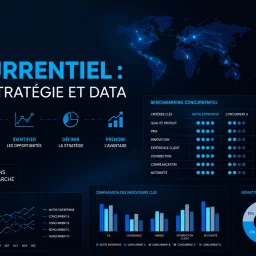
In Tunisia in 2025,financial audits are no longer a dreaded necessity: they are a performance driver for SMEs, mid-sized companies, and startups that want to remain competitive in a changing market. Driven by the digitization of administrative processes (the National Business Registry (RNE) and TUNEPS for public procurement) and the growth of the tech ecosystem (Startup Act), Tunisian companies stand to benefit from adopting a modern, AI-powered, and advisory-focused audit approach.
Gone are the days when auditors simply checked columns of numbers. With digital accounting expertise aligned with the Corporate Accounting System (Law 96-112, Commercial Accounting Code) and international best practices (IFRS/Tunisia resources), auditing has become a management tool that anticipates growth and cash flow.
The technological revolution is transforming auditing from top to bottom
Artificial Intelligence for Precision
The year 2025 marks a decisive turning point in the digitization of auditing. The most forward-thinking accounting firms are now using machine learning algorithms capable of analyzing thousands of transactions in just a few seconds. This AI revolution is not limited to marketing: it is radically transforming financial auditing and adapting to Tunisia’s specific context (multi-currency transactions, requirements of European clients, and local subsidies and incentives).
Today,innovation toolsin auditing make it possible to:
- Automatically detect accounting discrepancies
- Analyze financial trends in real time
- Predicting liquidity risks with unmatched accuracy
- Automate bank reconciliation and accounting data entry
- Verify compliance with local regulations (VAT, corporate income tax, record-keeping requirements, and document traceability)
Integrated with CRM and e-commerce platforms, these tools also support digital customer acquisition and customer retention. Discover our digital marketing strategy and search engine optimization (SEO) services.

Blockchain and Financial Security: A Winning Combination
Financial security is becoming a major challenge for innovative companies. With the rise of blockchain, accounting data is becoming more traceable and reliable. This revolutionary technology makes it possible to create an immutable transaction history, drastically reducing the risk of fraud and simplifying audit processes.
In Tunisia, companies that integrate these blockchain solutions into their accounting systems benefit from greater transparency, which is an asset in winning over investors and partners. This transparency also enhances the quality of the financial information required by the Financial Market Council (CMF) for issuers and regulated transactions.
Regulatory Compliance: Navigating the Maze of New Standards
CSRD and ESG Reporting: The New Challenges of 2025
The European CSRD directive now requires a growing number of companies to provide detailed non-financial reporting. For Tunisian companies with exposure to European supply chains (exports, subcontracting), preparing for these requirements is becoming a competitive advantage. Locally, compliance is based on the Corporate Accounting System (Law 96-112) and the Commercial Companies Code, under the auspices ofthe OECT and in line with the IFRS resources specific to Tunisia.
Modern auditors must be proficient in:
- Assessment of ESG (Environmental, Social, and Governance) Criteria
- Analysis of Climate and Social Impacts
- Verification of Sustainability Indicators
- Certification of Ethical Practices
In practice, this involves aligning your ESG reporting and your SCE financial statements to meet both local requirements and those of European partners.

Changes to Audit Thresholds and Requirements
In Tunisia, the requirement for an audit applies when a company exceeds two of the three legal thresholds (total assets, revenue, average headcount) or based on its legal form (e.g., SA), in accordance with the Commercial Companies Code andOECT regulations. Beyond mere compliance, this requirement presents an opportunity to structure internal controls and support financial performance. For an up-to-date overview, see also theICAEW’s resourceson Tunisia.
Strategic Auditing: Much More Than a Legal Requirement
A Source of Funding and Credibility
For startups and scale-ups seeking funding,a financial audit is becoming the key to gaining investors’ trust. Investment funds and business angels now require complete transparency regarding:
- The Reliability of Financial Statements
- The robustness of internal processes
- Compliance with Industry Standards
- The Maturity of Internal Control Systems
Socials Analytica supports ambitious companies in Tunisia with a modern audit that combines technical rigor and business acumen to expedite access to financing (e.g., BFPME) and enhance credibility during bids on TUNEPS.
Tax Optimization and Government Subsidies
In Tunisia,innovation in auditing makes it possible to identify concrete levers for optimization and incentives: provisions of the Investment Code (Law 2016-71) and bonuses and benefits related to the Startup Act (certification, leave for business creation, foreign currency account), as well as co-financing and guarantee mechanisms available from public and quasi-public entities (e.g., BFPME).
A modern financial audit incorporates these aspects to turn compliance into a competitive advantage and ensure the success of your grant, incentive, and funding applications.

Cybersecurity and Data Protection: The New Imperatives
Law 2004-63 (INPDP) and Accounting Data Security
With the rise in cyberattacks, financial security and compliance with Tunisia’s data protection law have become essential. The National Authority for the Protection of Personal Data (INPDP) regulates data processing in accordance with Organic Law No. 2004-63 (text). Auditors in 2025 must evaluate:
- The Robustness of Accounting Information Systems
- Compliance with Law 2004-63 (data processing registry, legal basis, security, and individuals’ rights)
- Backup and Disaster Recovery Procedures
- Training teams on best practices for security and confidentiality
Audit of Accounting Information Systems
The growing integration of accounting systems with business applications (CRM, ERP, e-commerce) and public platforms (e.g., TUNEPS) creates new risks but also leads to productivity gains (preparation for e-invoicing, automation of controls).Optimizing accounting information systems is becoming a major strategic issue for performance and security.
Socials Analytica: A Pioneer in Next-Generation Auditing
A Disruptive Approach to Auditing and Consulting
At Socials Analytica, we have revolutionized our approach tofinancial auditing and consulting to meet the challenges of 2025. Our team of experts combines:
- Cutting-edge technologies: AI, machine learning, predictive analytics
- Industry expertise: in-depth knowledge of the specific challenges facing each industry
- Strategic Vision: Transforming Auditing into a Performance Driver
- Local Compliance Under Control: OECT, INPDP (Law 2004-63), CMF Requirements
- Personalized support: customized solutions tailored to each organization

Integrated Services for Optimized Growth
Our holistic approach integrates auditing into a comprehensive strategyfor optimizing structures and managing cash flow. This 360° perspective enables innovative companies to maximize their growth potential. We also draw on our expertise in Marketing & Communications— digital marketing strategy, SEO, social media management, and search engine advertising —HR & Organization— human resources optimization —and Transformation— workflow automation, AI, and customer relationship management.
Predictive Auditing: Anticipating to Achieve Greater Success
Analytics and Business Intelligence to Drive Performance
Modern auditing no longer merely captures a snapshot of the past—it predicts the future. With predictive analytics tools, companies can:
- Anticipate their cash flow needs
- Optimize their customer conversion cycle
- Identify risks before they materialize
- Modeling Different Growth Scenarios
This proactive approach transforms the auditor into a true strategic partner, capable of informing the company’s most critical decisions.

ROI and Performance Measurement
Digital accounting in 2025 natively integrates customized key performance indicators (KPIs). This provides each company with a customized dashboard, updated in real time, enabling precise management of financial and operational performance.
Conclusion: Auditing as a Catalyst for Entrepreneurial Innovation
By 2025, in Tunisia, financial and accounting auditing had definitively broken away from the outdated image of the compliance auditor. Now a true strategic ally, it supports companies in their pursuit of performance, growth, and sustainability, while meeting the requirements of local regulatory bodies (SCE, OECT, INPDP) and international partners.
Organizations that embrace this transformation—by partnering with experts such as Socials Analytica—gain a competitive edge. They turn a regulatory requirement into a competitive advantage, secure access to funding, and build credibility in both the public and private sectors.
Key takeaway: For Tunisian companies, a modern, data-driven audit tailored to the local context is a direct driver of growth, financing, and trust.