In 2025, small and medium-sized businesses face a major challenge: choosing the right printing technology to optimize their marketing costs while maintaining impeccable quality. Between traditional offset printing and next-generation digital solutions, the decision is no longer simply a matter of technical comparison. It is part of a comprehensive digital transformation strategy that directly impacts business performance.
![image_1]()
 Declining unit costs are the second pillar of this technology. For runs of 5,000 copies or more, offset printing becomes unbeatable from a cost perspective. An SME that produces monthly promotional flyers for its 50 retail locations will save up to 40% on printing costs compared to digital printing.
The versatility of the substrates is also a major advantage. Offset printing can be used on a wide range of materials, from newsprint to corrugated cardboard, as well as plastics and metals. This flexibility is crucial for companies diversifying their communication media.
Declining unit costs are the second pillar of this technology. For runs of 5,000 copies or more, offset printing becomes unbeatable from a cost perspective. An SME that produces monthly promotional flyers for its 50 retail locations will save up to 40% on printing costs compared to digital printing.
The versatility of the substrates is also a major advantage. Offset printing can be used on a wide range of materials, from newsprint to corrugated cardboard, as well as plastics and metals. This flexibility is crucial for companies diversifying their communication media.
![image_2]()
 Mass customization is becoming accessible to small and medium-sized businesses thanks to digital technology. A company can now produce 1,000 marketing letters with personalized content at the same cost as a standard print run. This capability aligns perfectly with modern customer relationship management strategies.
Responsiveness is a major competitive advantage. From file creation to the finished print, the process can be completed in less than 2 hours. This speed allows companies to seize business opportunities with unmatched agility.
Mass customization is becoming accessible to small and medium-sized businesses thanks to digital technology. A company can now produce 1,000 marketing letters with personalized content at the same cost as a standard print run. This capability aligns perfectly with modern customer relationship management strategies.
Responsiveness is a major competitive advantage. From file creation to the finished print, the process can be completed in less than 2 hours. This speed allows companies to seize business opportunities with unmatched agility.
![image_3]()
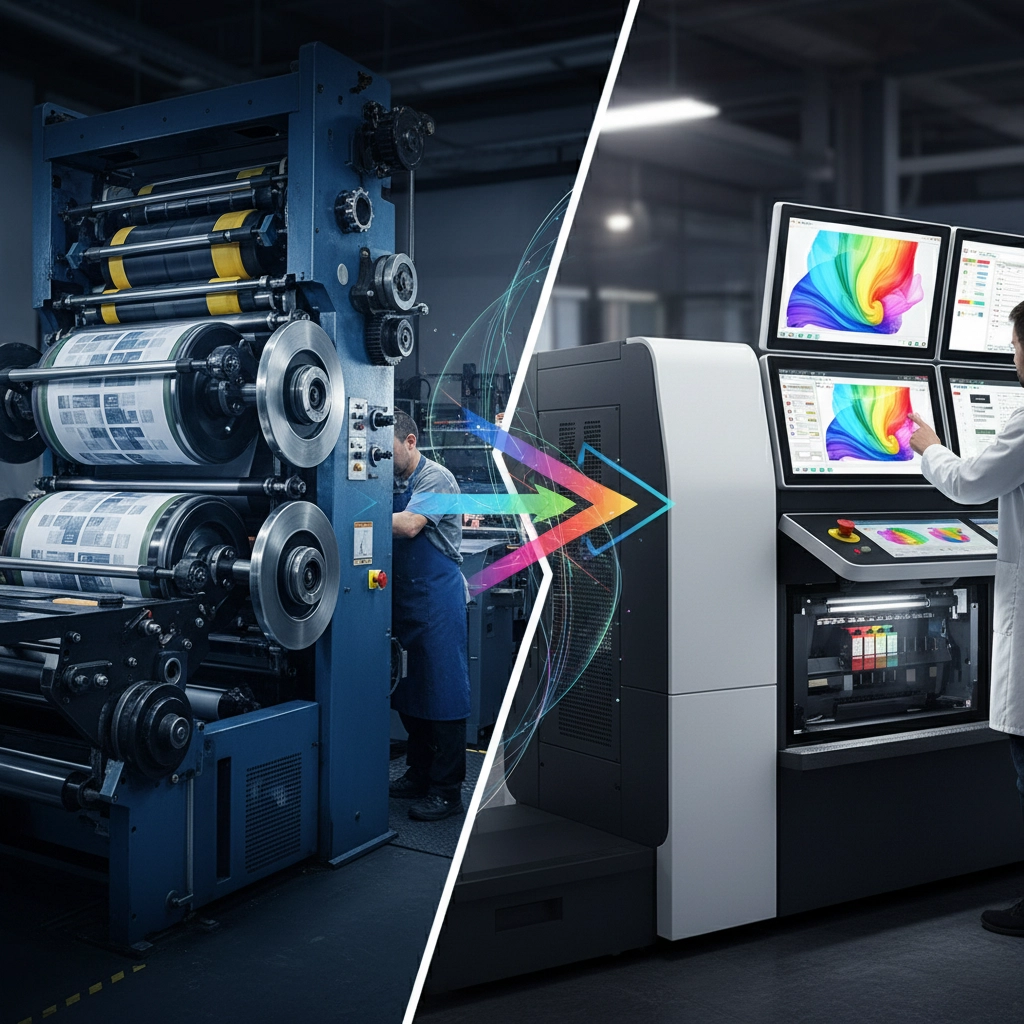
Offset Printing in 2025: Still the King of High-Volume Printing
Offset printing remains the gold standard for mass production. This century-old technology has evolved with the times, incorporating innovations such as vegetable-based inks and chemical-free plates to address today’s environmental challenges.The Unbeatable Advantages of Offset Printing
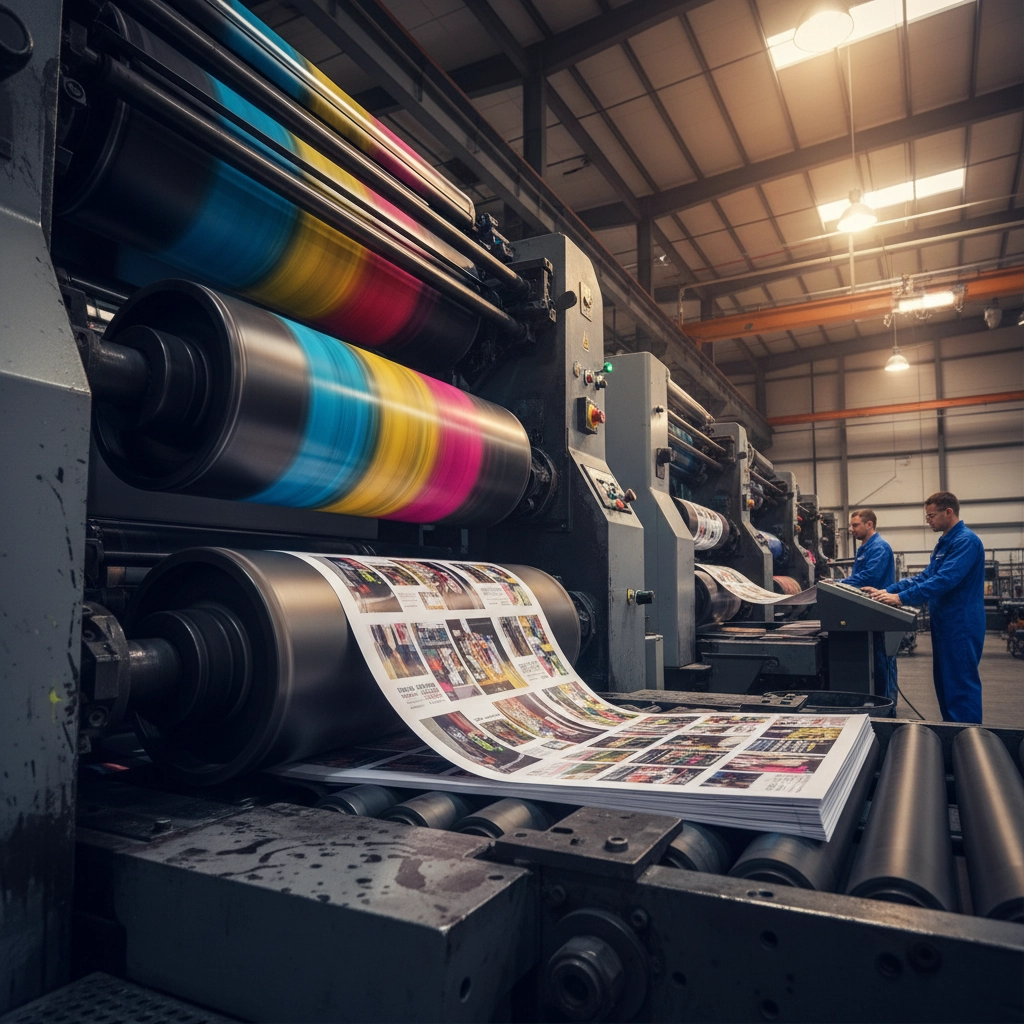
Print quality remains the primary advantage of offset printing. Thanks to its indirect transfer system, it offers exceptionally accurate color reproduction, which is particularly valued for high-end marketing materials. Companies that invest in a comprehensive digital marketing strategy often rely on offset printing for their premium catalogs and brochures.
Declining unit costs are the second pillar of this technology. For runs of 5,000 copies or more, offset printing becomes unbeatable from a cost perspective. An SME that produces monthly promotional flyers for its 50 retail locations will save up to 40% on printing costs compared to digital printing.
The versatility of the substrates is also a major advantage. Offset printing can be used on a wide range of materials, from newsprint to corrugated cardboard, as well as plastics and metals. This flexibility is crucial for companies diversifying their communication media.
Challenges to Anticipate
The main drawback of offset printing is its high fixed costs. Setup, plate, and start-up costs represent an unavoidable investment that can reach €500 per project, regardless of the print run. This reality makes offset printing impractical for print runs of fewer than 2,000 copies. Production lead times pose another challenge. Between plate preparation, setup, and the actual printing process, you should allow at least 48 to 72 hours. This time constraint can be problematic in an environment where companies are seeking ever-greater responsiveness.Digital Printing: Agility in the Service of Personalization
Digital printing has revolutionized the graphic arts industry by making small-batch production accessible to everyone and opening up new creative horizons. By 2025, it will have established itself as an indispensable tool for personalized marketing.The On-Demand Production Revolution
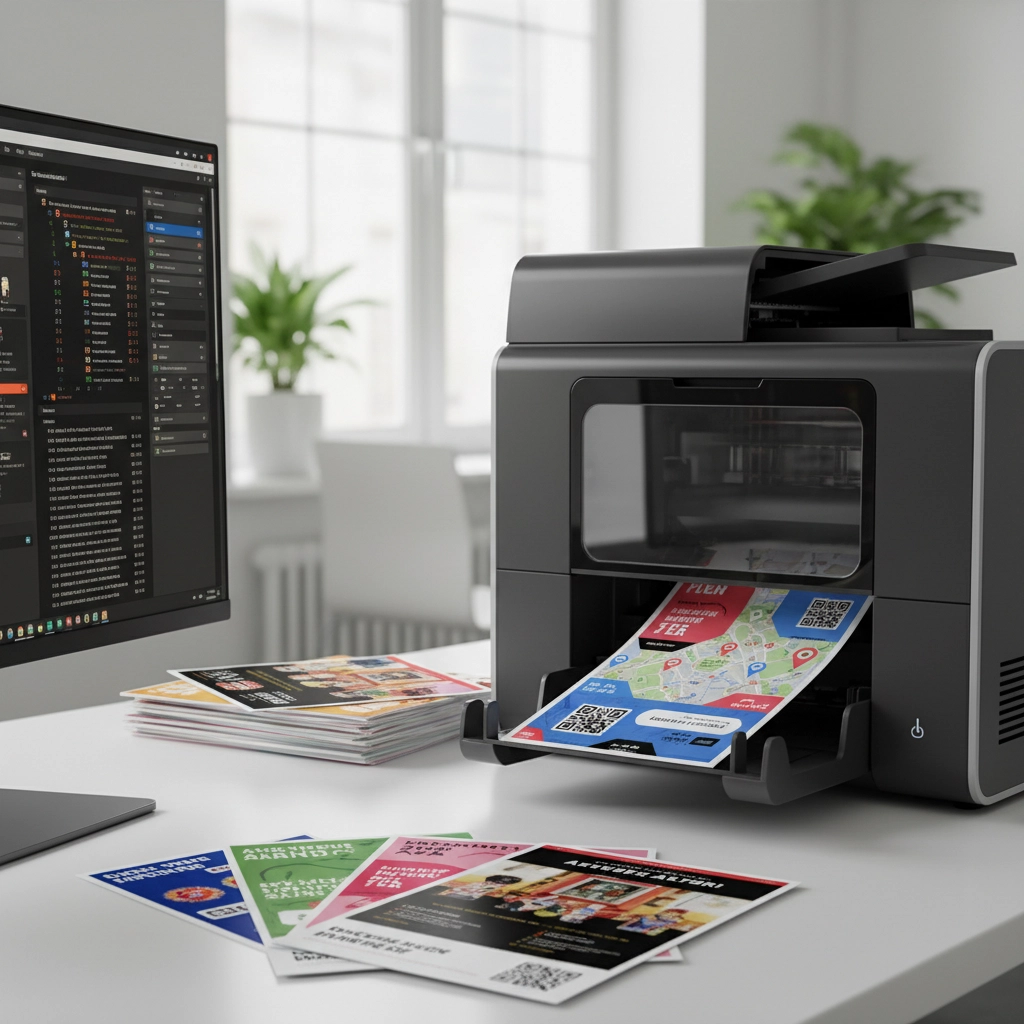
The main strength of digital printing lies in its ability to print directly from a digital file, without any intermediate steps. This feature is revolutionizing inventory management: gone are the days of thousands of brochures yellowing on the shelf; now it’s all about just-in-time printing.
Mass customization is becoming accessible to small and medium-sized businesses thanks to digital technology. A company can now produce 1,000 marketing letters with personalized content at the same cost as a standard print run. This capability aligns perfectly with modern customer relationship management strategies.
Responsiveness is a major competitive advantage. From file creation to the finished print, the process can be completed in less than 2 hours. This speed allows companies to seize business opportunities with unmatched agility.
Limits You Should Be Aware Of
The high unit cost for large print runs is the main limitation of digital printing. For print runs exceeding 5,000 copies, the price difference compared to offset printing becomes significant and can have a major impact on the marketing budget. Although the quality is excellent, it does not always match that of offset printing in certain technical aspects, such as ink density or the fineness of detail. For applications requiring absolute photographic quality, offset printing still has the edge.Comparison Chart: Offset vs. Digital in 2025
| Criteria | Offset Printing | Digital Printing |
|---|---|---|
| Optimal Volume | > 5,000 copies | < 5,000 copies |
| Unit cost | €0.05 to €0.15 (depending on volume) | €0.10 to €0.50 |
| Delivery Time | 48 hours to 5 days | 2 hours to 24 hours |
| Customization | Impossible or very expensive | Native and cost-effective |
| Color Quality | Excellent (Pantone, full-color+) | Very Good (Standard Four-Color) |
| Available media | 500+ items | 200+ items |
| Environmental Impact | Moderate (with eco-friendly inks) | Low (chemical-free) |
Decision-Making Guide: Which Technology Is Right for Your Small Business?
Select “Offset” if:
Your print volumes regularly exceed 5,000 copies per project, and you can plan your needs in advance. Offset printing is the ideal choice for product catalogs, corporate brochures, packaging, and any materials requiring flawless photographic quality. A small-to-medium-sized enterprise (SME) in the textile industry that produces its own seasonal collections would opt for offset printing: 10,000 spring-summer catalogs, premium quality, planned two months in advance. The ROI is optimal.Choose digital if:
Whether your needs involve responsiveness, customization, or small print runs, this technology excels at targeted mailings, event invitations, communication tests, or dynamic documents. A digital marketing consulting firm that produces customized reports for its clients will consistently prioritize digital delivery: 50 copies per report, unique content, and delivery within 24 hours.