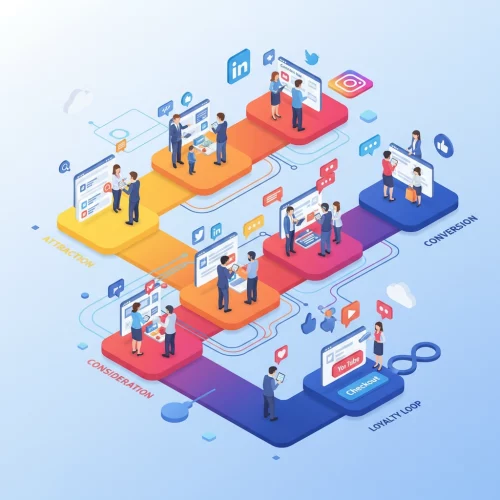
Are you having trouble deciding which marketing strategy to adopt for your business? You’re not alone. Two popular approaches are outbound marketing and inbound marketing. But which one is best for your business? In this article, we’ll examine the differences between these two strategies and help you make an informed decision.
Outbound marketing, also known as traditional marketing, involves proactively spreading your message to a wider audience. Common examples of outbound marketing include TV commercials, newspaper ads, and cold calls. On the other hand, inbound marketing, also known as content marketing, aims to attract potential customers by creating high-quality content and providing them with useful information.
So which strategy is best for your business? It depends on several factors, such as your industry, your target audience, and your business goals. It may even make sense to take a hybrid approach by combining both strategies. The key is to choose the one that best fits your needs and to implement it with top-notch planning and execution. Ready to make an informed decision for your business? Let’s continue.
Key Takeaways
Outbound Marketing
Definition: A promotional approach in which companies actively disseminate messages to a broad audience (often in a one-way manner).
Objective: To stand out from the competition and quickly establish a brand presence, which is useful for launching new products and services.
Disadvantages: High costs (TV and print ads), negative perception due to intrusive ads, difficulty accurately measuring return on investment.
Keys to success: Clearly define the target audience, choose the appropriate channels, measure and analyze the results, and be creative.
Inbound Marketing
Definition: A strategy that attracts customers by providing valuable content and relevant experiences without interrupting consumers.
Approach: Creating informative and engaging content (blog posts, videos, social media posts).
Objective: To build a relationship of trust with the target audience by answering their questions and providing them with useful information.
Keys to Success: Create high-quality and diverse content, use social media to increase visibility, and encourage interaction with the audience.
Selection and Combination of Approaches
Selection criteria: Depends on the company’s objectives and resources.
Outbound marketing: Best suited for quick sales.
Inbound marketing: Best for building long-term relationships and strengthening brand awareness.
Recommendation: A combination of both approaches is often the best way to maximize reach and impact, while remaining flexible and adapting the strategy based on results and market conditions.
What is outbound marketing?
Outbound marketing, often considered the traditional approach to advertising, is characterized by the company taking the initiative to reach a broad audience. This involves proactively disseminating promotional messages, whether through television commercials, billboards, unsolicited emails, or cold calls. These methods aim to capture consumers’ attention, often without them having previously expressed an interest in the product or service being offered. The main goal is to quickly generate leads and sales.
This strategy is based on the belief that if a company can showcase its product to as many people as possible, there will inevitably be interested prospects. Outbound marketing has been used successfully for decades, but its effectiveness has been called into question in the digital age, where consumer behavior has changed. Companies must therefore assess how to integrate this approach into an ever-changing marketing landscape.
It is important to note that outbound marketing can take various forms, ranging from television advertising campaigns to live events. Although these methods may seem intrusive to some consumers, they are often effective in reaching specific market segments, particularly if they are well-targeted. This raises interesting questions about how to make this strategy more relevant in today’s context.


The Benefits of Outbound Marketing
One of the main advantages of outbound marketing is its ability to generate quick results. Unlike long-term strategies, such as inbound marketing, which take time to build an audience and establish trust, outbound marketing can generate leads almost instantly. For example, a television ad campaign can reach millions of people in a single broadcast, offering immediate potential to increase sales.
In addition, outbound marketing provides complete control over the message and targeting. Companies can define exactly what they want to communicate and to whom, using precise demographic data to reach their target audience. Modern outbound marketing tools, such as digital advertising, allow for highly granular audience segmentation, thereby maximizing the impact of campaigns.
Finally, outbound marketing can be particularly effective for companies looking to build brand awareness quickly, especially in saturated markets. Through well-designed campaigns, a company can set itself apart from the competition and establish a strong brand presence in a short amount of time. This can be crucial, especially when launching new products or services.
The Drawbacks of Outbound Marketing
Despite its advantages, outbound marketing also has significant drawbacks. One of the biggest challenges is the cost. Advertising campaigns, particularly on television or in large-scale print publications, can require enormous budgets. This can be problematic for small businesses or startups that lack the financial resources to invest in such campaigns.
Another major drawback is the negative perception often associated with outbound marketing. Many consumers feel overwhelmed by intrusive ads, which can lead to resistance to these messages. This saturation can result in a tendency to ignore ads, thereby reducing their effectiveness. It therefore becomes essential for companies to find innovative ways to capture their audience’s attention without coming across as too intrusive.
Finally, the difficulty in measuring the effectiveness of outbound campaigns is another obstacle. Although certain metrics, such as impressions or clicks, can be tracked, it is often difficult to establish a direct link between an advertising campaign and the sales it generates. This complicates the assessment of return on investment and can make it more difficult to adjust strategies based on the results obtained.

What is inbound marketing?
Inbound marketing, on the other hand, is an approach that aims to attract customers to a product or service by providing valuable content and relevant experiences. Rather than pushing messages in an intrusive way, this strategy relies on the idea of attracting consumers through informative and engaging content, such as blog posts, videos, infographics, and social media posts.
The main goal of inbound marketing is to build a relationship of trust with the target audience. By providing useful information and answering consumers’ questions, companies can establish their expertise and credibility in their field. This process helps generate qualified leads, as prospects who choose to engage with the content are generally more interested in the products or services being offered.
Inbound marketing revolves around various tactics, such as search engine optimization (SEO), content marketing, and social media. These methods help create a strong online presence and attract visitors to the company’s website. Ultimately, this approach aims to foster long-term relationships with customers, which can lead to increased customer loyalty and referrals.

If you have a project and need advice or guidance, we're here for you!

The Benefits of Inbound Marketing
One of the most notable advantages of inbound marketing is its cost-effectiveness. Unlike outbound marketing, which often requires large advertising budgets, inbound marketing relies on creating high-quality content that can be shared and distributed at a lower cost. This makes it a particularly attractive option for small businesses and startups looking to maximize their return on investment.
Another benefit of inbound marketing is the ability to build a strong and authentic brand. By providing relevant and valuable content, companies can establish a relationship of trust with their audience. This fosters brand loyalty, as consumers are more likely to buy from a company they perceive as an expert in its field. This trust can also lead to positive recommendations, thereby expanding the company’s reach.
Finally, inbound marketing allows for better measurement of results. The analytics tools available today make it possible to accurately track user behavior, measure engagement, and evaluate the return on investment of campaigns. This allows companies to adjust their strategies in real time and optimize their efforts to achieve the best possible results.
The Drawbacks of Inbound Marketing
Despite its many advantages, inbound marketing is not without its challenges. One of the main drawbacks is the time it takes to see significant results. Unlike outbound marketing, which can generate leads quickly, inbound marketing often requires months of work to establish an online presence and attract an audience. This can be frustrating for businesses that want immediate results.
In addition, inbound marketing requires expertise in content creation and search engine optimization. Companies must invest in creating high-quality content and implementing effective SEO strategies to stand out in a crowded digital landscape. Without these skills, it can be difficult to execute a successful inbound marketing strategy.
Finally, competition is another major challenge. As more and more companies adopt inbound marketing, it is becoming increasingly difficult to stand out. Companies must constantly innovate and create engaging content to capture their audience’s attention. This may require additional resources in terms of time and staff, which can pose challenges for some companies.

It is essential to evaluate these factors to determine which approach will be most effective. For example, if a company is looking to quickly generate sales for a new product, outbound marketing may be more appropriate because of its ability to produce immediate results.
On the other hand, if the goal is to build long-term relationships with customers and strengthen brand awareness, inbound marketing may be the best option. This approach helps build a base of loyal customers who are more likely to return and recommend the company to others.
It is also important to consider the available resources. Small businesses with limited budgets may find that inbound marketing is more feasible, as it requires less initial financial investment. On the other hand, companies with larger budgets may choose to combine both approaches to maximize their reach and impact. Ultimately, a thorough analysis of the business’s needs and capabilities is crucial to making an informed decision.
To succeed in outbound marketing, it is essential to follow certain best practices. First and foremost, it’s crucial to clearly define your target audience. By understanding who your potential customers are and what they’re looking for, you can create more impactful and effective messages. This also means choosing the most appropriate communication channels to reach these consumers.
Next, it’s important to measure and analyze the results of each campaign. Using analytics and tracking tools will help you understand what’s working and what isn’t. This will help you adjust your strategies in real time and continuously improve your outbound marketing efforts. For example, if a digital advertising campaign generates few conversions, it may be necessary to change the message or target a different market segment.
Finally, creativity plays a key role in the success of outbound marketing. Consumers are constantly exposed to advertisements, which means that to capture their attention, your message must stand out. Use eye-catching visuals, engaging stories, and compelling offers to create memorable campaigns that drive action.
Best Practices for Inbound Marketing
To maximize the effectiveness of inbound marketing, several best practices should be followed. First, creating high-quality content is essential. The content must be informative, relevant, and engaging to capture the attention of your target audience. Additionally, it’s important to diversify the types of content you produce—including blog posts, videos, infographics, and more—to reach different segments of your audience.
Next, using social media is an essential strategy in inbound marketing. Sharing your content on relevant social media platforms can increase its visibility and drive traffic to your website. Also, encourage interaction with your audience by responding to their comments and asking them questions, which can strengthen engagement and brand loyalty.
Finally, search engine optimization (SEO) is crucial for ensuring that your content is easily found by online users. This involves using relevant keywords, creating internal and external links, and maintaining a user-friendly website structure. By investing in a solid SEO strategy, you increase your chances of attracting high-quality organic traffic to your content.
Conclusion: Which Strategy Should You Choose for Your Business?
Choosing between outbound and inbound marketing is no simple task and depends on several variables. Each approach has advantages and disadvantages that can influence how you achieve your business goals. For some companies, an outbound marketing strategy may be necessary to generate quick sales, while others may benefit from an inbound marketing approach focused on building lasting relationships with customers.
It is also possible to take a hybrid approach, combining the strengths of both strategies to maximize results. For example, a company can use outbound marketing to draw attention to a specific campaign while simultaneously building an online presence through inbound marketing. This allows the company to meet short-term goals while investing in long-term relationships with customers.
Ultimately, the key is to remain flexible and adapt your strategy based on the results you achieve and changes in your market. By regularly analyzing your performance and adjusting your approaches, you’ll be able to find the marketing mix that works best for your business, ensuring your long-term success.