
Outbound marketing in 2025 bears no resemblance to the mass campaigns of the past. Gone are the days of bombarding prospects with generic emails and hoping that 1% would respond. Today, successful companies have mastered the subtle art of automated multichannel prospecting: a smart approach that combines multiple touchpoints to create a consistent and compelling experience.
According to Salesforce, companies that use a multichannel approach generate 287% more leads than those that stick to a single channel. But be careful: multichannel does not mean haphazard proliferation. It is a sophisticated strategy in which each touchpoint reinforces the others in a perfectly orchestrated symphony.
![image_1]()
 This approach is based on a fundamental psychological principle: familiarity breeds trust. When a prospect sees you regularly across various channels with a consistent message, you go from being a stranger to a credible authority.
![image_2]()
![image_3]()
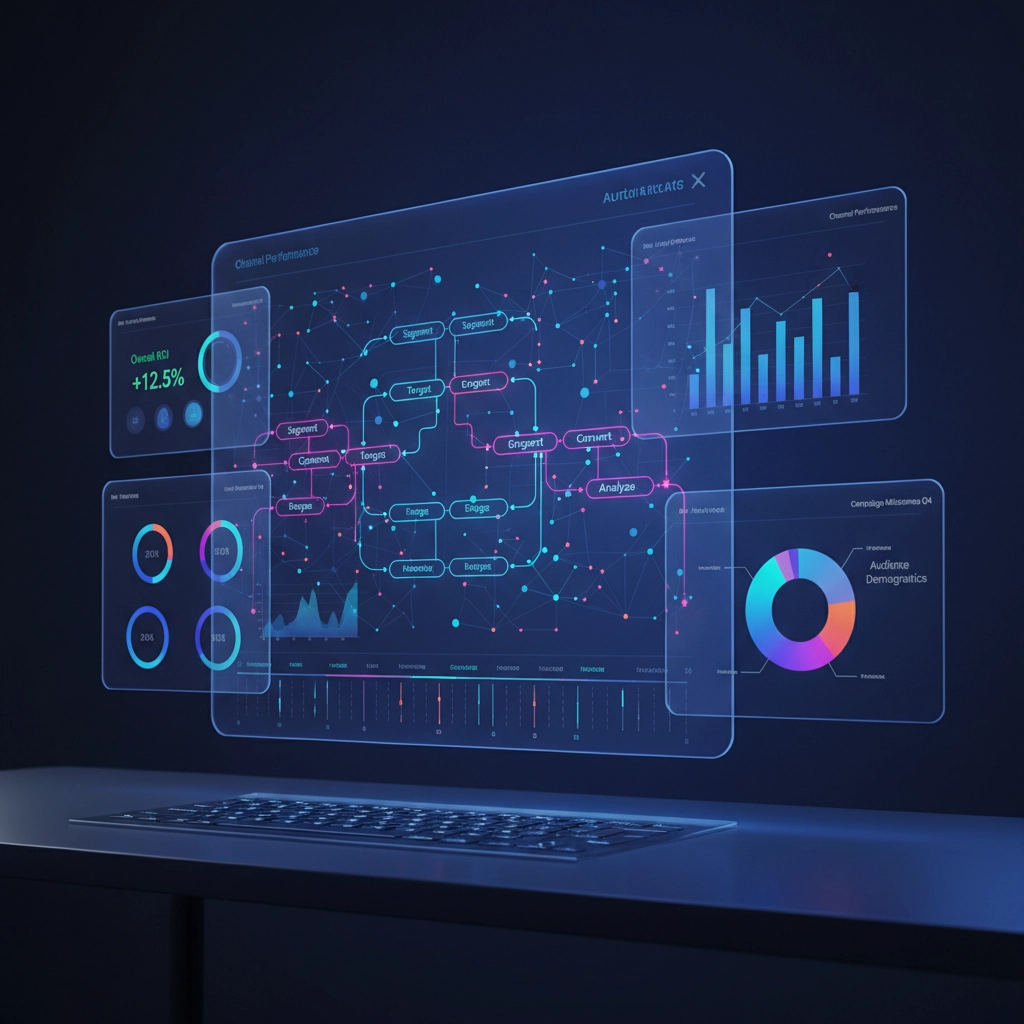
 Predictive analytics now makes it possible to identify the most effective channel combinations for each type of prospect. Applying artificial intelligence to outbound sales turns prospecting into an exact science.
The Multichannel Revolution: Beyond Email
The days when outbound marketing was simply a series of emails are long gone. Today’s decision-makers juggle LinkedIn, their email inboxes, mobile notifications, and even their professional social media platforms. A modern digital marketing strategy must therefore be active on all these fronts. Intelligent multichannel typically combines:- LinkedIn for Social Engagement and Building Authority
- Email for personalized messages and follow-ups
- Phone for Strategic Human Touchpoints
- Ad retargeting to maintain visibility
- SMS/WhatsApp for urgent follow-ups (primarily B2C)
This approach is based on a fundamental psychological principle: familiarity breeds trust. When a prospect sees you regularly across various channels with a consistent message, you go from being a stranger to a credible authority.
Intelligent Automation: The Key to Large-Scale Execution
Automation isn’t just a time-saver—it’s a relevance booster. Modern platforms like HubSpot, Outreach, and Apollo let you create sophisticated workflows that adapt to each prospect’s behavior. In practical terms, here’s how a smart automated sequence works: Day 1: Personalized initial contact email Day 3: LinkedIn connection with a personalized message Day 7: Sharing Relevant Content on LinkedIn Day 10: Follow-up email with a helpful resource Day 14: Phone call if engagement is detected Day 21: Creative Breakup Email Each step is triggered by specific conditions: opening an email, visiting a LinkedIn profile, downloading content, etc. This makes automation responsive rather than mechanical.The 4 Pillars of a Successful Multichannel Strategy
1. Advanced Behavioral Segmentation
Forget basic segmentation by industry or company size. Modern segmentation relies on intent signals: who visits your site, who engages with your content, who changes jobs, who is raising funds… These “trigger events” allow you to tailor the timing and message with pinpoint precision.2. Cross-Channel Message Consistency
Your message should be recognizable across different channels while adapting to each platform’s style. An email may be more formal, while a LinkedIn post may be more conversational, but the value proposition remains the same. This consistency helps people remember your message and builds credibility.
3. Integrated Social Selling
LinkedIn is no longer just a lead generation channel; it has become an ecosystem of influence. Modern social media management integrates content publishing, community engagement, and direct lead generation into a comprehensive strategy.4. Intelligent Temporal Orchestration
Timing is crucial in outbound marketing. The best tools analyze your prospects’ activity patterns to determine the optimal times to send emails. An email sent at 2:30 p.m. on a Tuesday is statistically more likely to be opened than one sent at 9:00 a.m. on a Monday.Technologies and Tools: The Winning Technology Stack
The effectiveness of a multichannel strategy depends on a well-integrated technology stack: Centralized CRM: HubSpot, Salesforce, or Pipedrive to Centralize Data LinkedIn Prospecting: Sales Navigator, Waalaxy, or Expandi Email Automation: Mailchimp, Pardot, or Marketo Data Enrichment: ZoomInfo, Apollo, or Clearbit Telephony: Aircall, RingCentral, or Twilio Analytics: Mixpanel, Google Analytics, or custom dashboards Integration between these tools via APIs or platforms like Zapier is crucial. When a prospect opens an email, it should automatically trigger a score in the CRM and potentially a notification for the sales team.Measure and Optimize: The KPIs That Really Matter
A multichannel strategy generates a wealth of data. Here are the key metrics to track: Engagement Metrics:- Email Open Rates by Segment
- LinkedIn Acceptance Rates by Persona
- Engagement with Shared Content
- Cost Per Acquisition (CPA)
- Multichannel vs. Single-Channel Sales Cycle Time
- Conversion Rate: Meeting → Opportunity
- Each channel’s contribution to the pipeline
- Top-performing sequences
- Breaking Points in Life Paths
Predictive analytics now makes it possible to identify the most effective channel combinations for each type of prospect. Applying artificial intelligence to outbound sales turns prospecting into an exact science.